
0086 15335008985


 русский
 Español
 Search
Home / News / Industry News / Pneumatic Rotary Actuator Types, Sizing, and Selection for Valve Automation
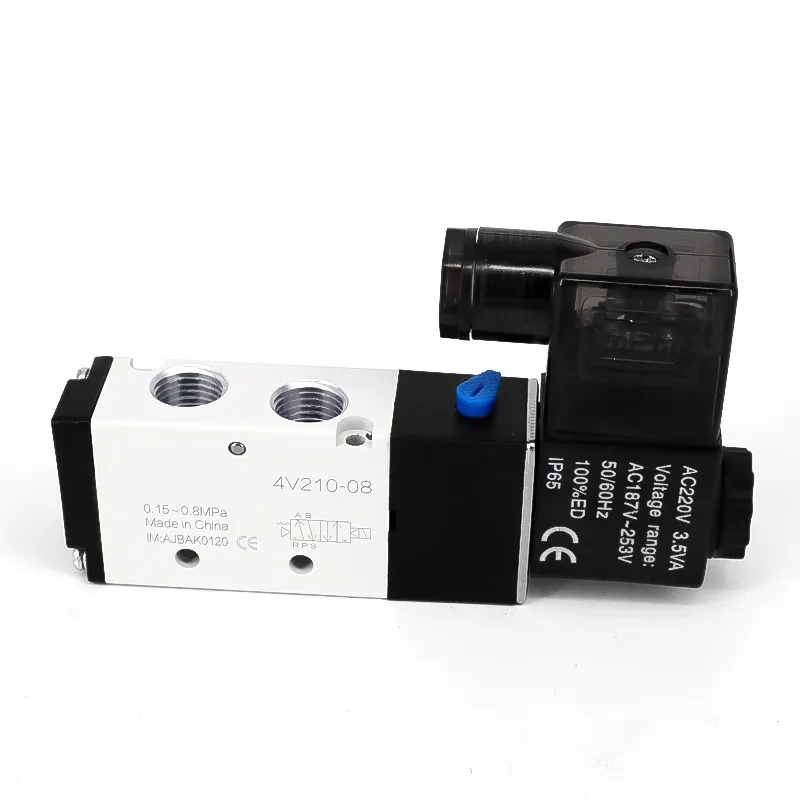
Pneumatic Rotary Actuator Types, Sizing, and Selection for Valve Automation
An engineer is evaluating a 250 mm butterfly valve in a water treatment plant. The valve must close from fully open to tight shutoff in about five seconds. The air supply is 6.5 bar, and the plant wants a pneumatic actuator that will not stall near the end of travel. This is the kind of application where a pneumatic rotary actuator is the obvious choice, but it is also where a wrong specification becomes expensive.
Start with torque, then check the mechanical design against the duty cycle. That sequence solves most selection problems before an order is placed.
The following sections explain how that works in practice, from the two core actuator designs to the accessories that make or break a valve automation package.
What Is a Pneumatic Rotary Actuator?
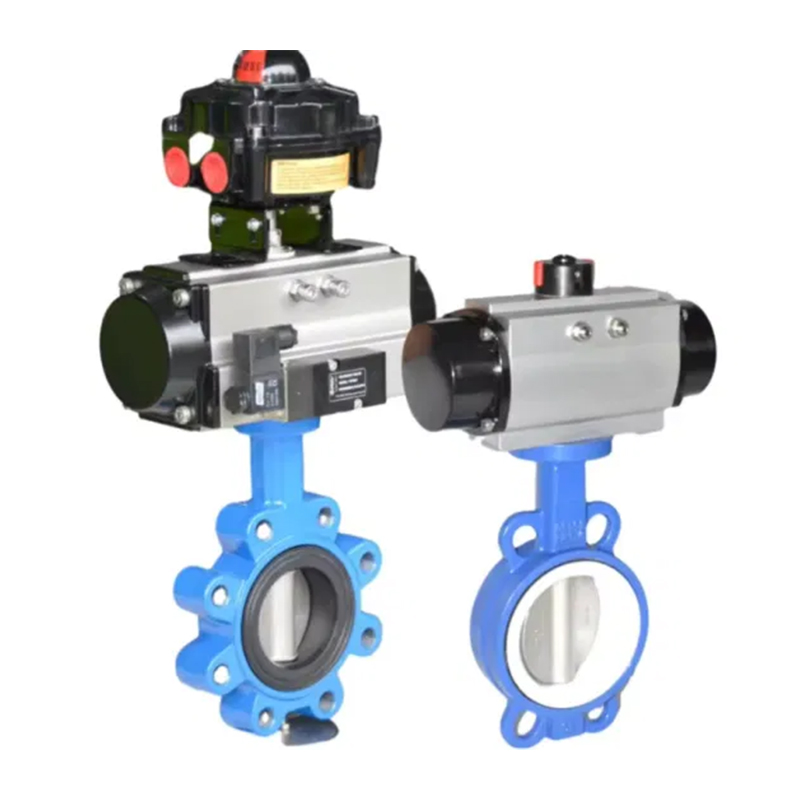
A pneumatic rotary actuator converts compressed air into rotary motion for quarter-turn valves such as butterfly valves, ball valves, and plug valves. The actuator takes air from the supply, drives a piston or a pair of pistons, and rotates a central pinion or a yoke block. The output shaft uses an ISO 5211 mounting pattern, which makes direct coupling to the valve stem or a gearbox straightforward.
The actuator must match the valve's torque curve across the entire stroke. The peak requirement often appears at the moment of opening or in the last degrees of closing. A rack-and-pinion actuator provides a relatively flat torque curve, while a scotch-yoke unit delivers more torque at the start and end of travel. Knowing which curve you need is the first step in practical selection.
The Two Core Mechanical Designs
Rack-and-Pinion Actuators
The rack-and-pinion design uses two parallel pistons. When air enters, the pistons push inward and the rack teeth rotate a central pinion. This produces a nearly constant torque through the whole 90-degree stroke. The result is fast, repeatable operation in compact dimensions. For high-cycle duties such as throttling or frequent open/close on ball valves, this is usually the preferred construction. The AKT series rack-and-pinion pneumatic actuator is designed for this type of duty.
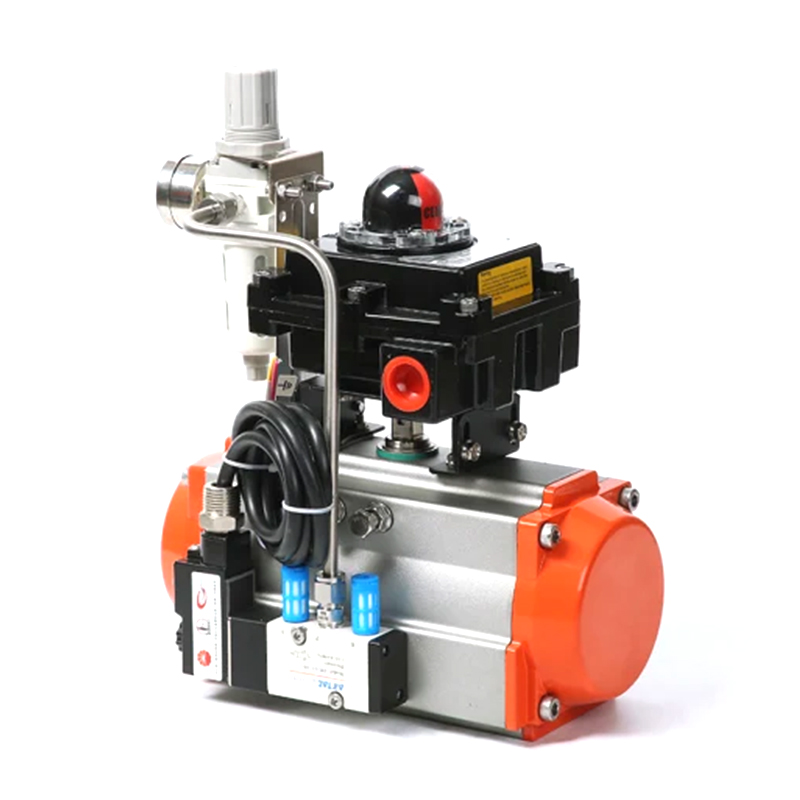 AKT Series Rack and Pinion Pneumatic Actuator for High-Cycle DutiesThis actuator uses a rack-and-pinion mechanism to deliver near-constant torque across the full stroke. It is well-suited for high-cycle applications such as throttling or frequent open/close operations on ball valves, offering fast and repeatable performance in a compact design.View Product →
Scotch-Yoke Actuators
The scotch-yoke design converts piston motion into torque through a block sliding inside a U-shaped yoke. Its torque curve is not flat, but is higher at the beginning of opening and at closing, and lower in the middle. That means the scotch-yoke construction can break a high start-up torque on a large butterfly valve without requiring a much bigger actuator. The AKW series scotch-yoke pneumatic actuator is one example of this mechanism.
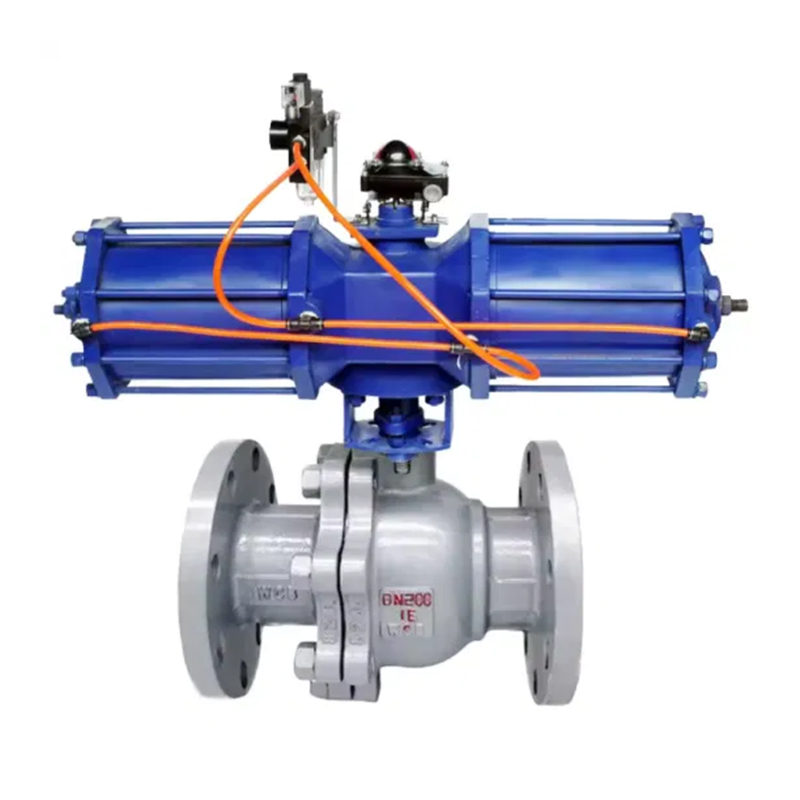 AKW Series Scotch Yoke Pneumatic Actuator for High Breakaway TorqueFeaturing a scotch-yoke design, this actuator produces higher torque at the start and end of travel, making it effective for breaking loose large butterfly valves. Its C-curve torque output is ideal for large-diameter valves and remote automation control.View Product →
| Dimension | Rack-and-Pinion | Scotch-Yoke |
|---|---|---|
| Torque curve | Flat and constant | Peaked at start and close |
| Typical speed | Fast | Moderate |
| Size for given torque | Compact | Larger |
| Best for | Ball valves, light/medium butterfly | Heavy butterfly, large ball valves |
| Cycle life | Very high | High |
Sizing and Selection Parameters That Matter
Torque Requirement
Begin with the valve's breaking torque. This is the torque needed to open the valve from the closed position, and it is affected by pressure, seat friction, and media properties. Multiply the required valve torque by a safety factor. A factor of 1.25 to 1.5 is common for clean media. For slurry, sticky, or corrosive services, use 2.0 or higher.
Air Supply Pressure
Most pneumatic actuators operate in the range of 5 to 8 bar. A drop in supply pressure directly reduces output torque. If the air supply is unstable, the actuator may start and move part of the stroke, then stop. A filter-regulator keeps the pressure clean and stable, but it cannot compensate for an undersized actuator.
Travel Time and Cycle Rate
Rack-and-pinion actuators can complete a 90-degree stroke in one to five seconds under normal conditions. Scotch-yoke designs are often slightly slower. Fast operation is useful for emergency shutdown, but too fast on a large valve can create water hammer in the pipe.
Environment and Fail-Safe
Ambient temperature, humidity, dust, and corrosive gas all affect seals, lubricants, and housings. A full discussion of these conditions can be found in this guide on how to choose pneumatic actuators for harsh industrial environments. Spring-return actuators close the valve on air loss; double-acting actuators remain in the last position. Matching the fail-safe mode to the process safety requirement is mandatory.
| Parameter | Recommended / Typical Value |
|---|---|
| Safety factor | 1.25–1.5 general, 2.0 slurry or sticky media |
| Air pressure | 5–8 bar |
| Ambient temperature | -20°C to +80°C standard |
| Travel angle | 0–90° standard, 0–180° in some designs |
| Position feedback | Limit switch, positioner, or both |
Accessories That Change Actuator Performance
A bare actuator does not complete a control loop. Three accessories are common on pneumatic rotary actuators.
Positioner
A positioner takes a control signal and adjusts actuator pressure until the actual valve position matches the desired position. The pneumatic positioner is essential for proportional or modulating control, not just open/close duty.
 4V210-08 5/2 Way Solenoid Valve with Spring Return for Actuator ControlThis AC220V single-head pilot-operated valve routes air to switch a double-acting actuator, with a spring-return fail-safe. It provides reliable directional control for automated valve systems, featuring 1/4-inch ports and a compact, replaceable coil design.View Product →
Limit Switch
A limit switch provides a discrete electrical signal at the end of travel. It is used for remote indication, interlocking, and feedback into a PLC or DCS.
Filter-Regulator
The filter-regulator removes water, oil, and particles from the supply air and holds a constant pressure. It is a low-cost way to protect the actuator and the positioner, and it is often the difference between years of service and premature failure.
Where Pneumatic Rotary Actuators Are Used
Pneumatic rotary actuators are found in many process industries, but four application patterns appear most often.
Water Treatment
In water utilities, actuators operate butterfly valves on intake lines, backwash systems, and filter trains. The environment is often damp and cycling is relatively slow. A robust rack-and-pinion actuator with a filter-regulator is a reliable standard package. See water treatment project examples for specific applications.
Fire Protection
Fire suppression networks demand fast, dependable valve movement. Spring-return actuators are common because they fail to a safe position if the air supply is lost.
Natural Gas
Gas stations and pipelines require flame-proof or explosion-proof actuators. Double-acting and spring-return designs provide reliable shutoff and are often mounted on ball valves.
Coal Mining and Power
Mining ventilation and coal handling systems use explosion-proof pneumatic actuators in dust-laden atmospheres. In power plants, desulfurization slurry lines benefit from robust actuators and corrosion-resistant valves.
Common Selection Mistakes to Avoid
- Undersizing the actuator. If the valve needs 200 Nm and the actuator only produces 190 Nm at the actual supply pressure, the valve will not close fully.
- Ignoring fail-safe behavior. A double-acting actuator holds the last position, which may not be acceptable for an emergency shutdown valve.
- Using a positioner for simple on/off service. This adds cost and complexity without improving the open/close function.
- Skipping the filter-regulator. Moisture and particles are the leading causes of seal wear and positioner failure.
- Forgetting to check whether the valve requires a gearbox. Large quarter-turn valves may need a gearbox to reduce the output torque demand.
Frequently Asked Questions
Q1: What is the difference between single-acting and double-acting pneumatic rotary actuators?
Single-acting actuators use spring force to return the valve to a defined position when air is lost. Double-acting actuators use air on both sides and hold the position when pressure is removed. The choice depends on the fail-safe requirement of the process.
Q2: How do I calculate the required actuator torque?
Obtain the valve's breaking torque from the valve manufacturer, add the effect of line pressure in an open-close valve, and multiply by a safety factor of 1.25 to 1.5. For sticky or slurry media, use 2.0 and check with the actuator supplier.
Q3: Can a pneumatic rotary actuator control flow proportionally?
Yes. A positioner plus an internally adjustable actuator can throttle flow. Rack-and-pinion actuators with positioners perform well in many modulating duties, but application limits should be checked.
Q4: How long does a pneumatic actuator last?
With clean, dry air and correct sizing, a pneumatic rotary actuator can last tens of thousands of cycles. Contamination, overloading, and poor lubrication are the main factors that shorten service life.
Q5: How do I choose between rack-and-pinion and scotch-yoke?
Choose rack-and-pinion for high cycle counts, fast operation, and compact space. Choose scotch-yoke for large butterfly valves or high-pressure ball valves with a high start-up torque. Verify the actual torque curve against the actuator's output curve before finalizing.
The Practical Path to a Reliable Pneumatic Actuator
A pneumatic rotary actuator is not a generic component. It has to be matched to the valve's torque demand, the available air supply, the required travel time, the environmental conditions, and the fail-safe logic. Start from the torque requirement, choose the mechanical design that fits the torque curve, and complete the package with the right accessories.
When in doubt, ask the supplier to verify the torque calculation and confirm the actuator size at your actual supply pressure. A small amount of careful engineering at the selection stage avoids expensive shutdown and valve replacement later.
Previous Post
No previous article
Next Post
Pneumatic Piston Actuator Guide: How They Work, Types, and Selection Tips
Related Products
CONTACT US
Shape the Future of Product with Us!

QUICK LINKS
CONTACT INFORMATION
- ADDRESS: Laoli Industrial Park, Chaoyang Village, Hengshan Bridge Town, Wujin District, Changzhou City, Jiangsu Province, China
- TELEPHONE: 0086 15335008985
- EMAIL: [email protected]
MOBILE

Copyright 2024 Changzhou Xinneng Automatic Control Equipment Co., Ltd All Rights Reserved.
