
0086 15335008985


 русский
 Español
 Search
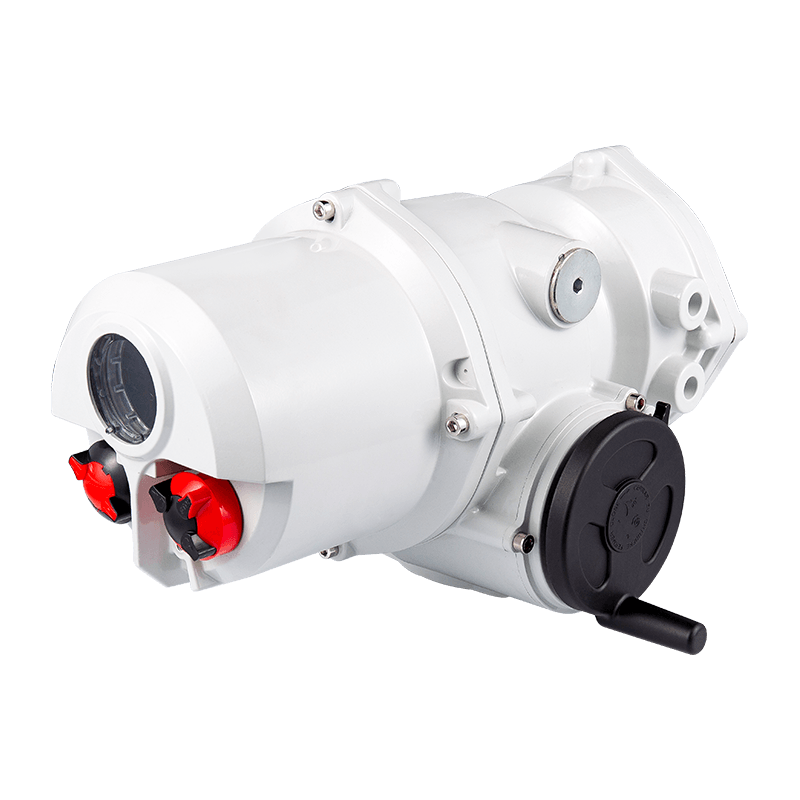
What is a Quarter Turn Electric Actuator?
A quarter turn electric actuator is an electromechanical device that rotates a valve or damper exactly 90 degrees — one quarter of a full rotation — to move it between the fully open and fully closed positions. It uses an electric motor as its power source, converting electrical energy into precise rotary motion without the need for compressed air or hydraulic fluid.
These actuators are widely used to automate ball valves, butterfly valves, plug valves, and louver dampers in industries ranging from water treatment to oil and gas. They are chosen when reliable, repeatable, and remotely controllable valve operation is required.
How a Quarter Turn Electric Actuator Works
The actuator's electric motor drives a gear train that amplifies torque and reduces speed, delivering the precise 90-degree output rotation needed to open or close the connected valve. Most units include limit switches that automatically cut power when the valve reaches either endpoint, preventing mechanical overload.
Key internal components typically include:
- Electric motor (AC or DC)
- Gear reduction unit (worm gear or spur gear)
- Limit switches for open/close position sensing
- Manual override handwheel for power failure scenarios
- Control board for signal processing (on/off or modulating)
The actuator mounts directly onto the valve using a standardized ISO 5211 flange interface, making it compatible with most quarter turn valves without additional adapters.
Main Types of Quarter Turn Electric Actuators
On/Off Actuators
These operate in two positions only — fully open or fully closed. They are the simplest and most cost-effective type, suitable for isolation duty where intermediate positions are not needed. Common control signals are 24V DC, 110V AC, or 220V AC.
Modulating Actuators
Modulating actuators can stop at any angle between 0° and 90°, allowing proportional flow control. They respond to analog input signals such as 4–20 mA or 0–10V DC, and are used in process control applications requiring fine flow regulation.
Fail-Safe Actuators
These use a spring-return or battery-backup mechanism to drive the valve to a predetermined safe position (open or closed) when power is lost. They are critical in safety-sensitive systems such as fire protection, emergency shutoff, and chemical processing.
Key Technical Specifications to Understand
When selecting a quarter turn electric actuator, the following parameters are critical:
| Parameter | Typical Range | Notes |
| Output Torque | 10 N·m – 3,000 N·m | Must exceed valve breakaway torque |
| Operating Voltage | 24V DC / 110V AC / 220V AC | Depends on site power supply |
| Running Time | 5 – 60 seconds per 90° | Slower = higher torque output |
| Enclosure Rating | IP65 – IP68 | Higher IP for wet or submerged use |
| Control Signal | On/Off, 4–20 mA, 0–10V, Modbus | Must match control system |
| Ambient Temperature | -20°C to +70°C | Extended range models available |
Torque sizing is the most critical step: the actuator's rated output torque should be at least 1.3× the valve's maximum required torque to ensure reliable operation under all conditions.
Typical Applications by Industry
Quarter turn electric actuators serve a broad range of industries. Their self-contained electric operation makes them especially valuable where pneumatic infrastructure is unavailable or impractical.
- Water & Wastewater: Automating butterfly valves in pumping stations, filtration systems, and distribution networks
- HVAC: Controlling dampers and zone valves in building automation systems
- Oil & Gas: Remotely operating ball valves on pipelines and tank farms
- Chemical Processing: Managing corrosive or hazardous fluid isolation with fail-safe capability
- Food & Beverage: Hygienic valve automation complying with sanitary standards
- Power Generation: Cooling water and fuel flow control in power plants
Quarter Turn Electric vs. Pneumatic Actuators
Both types achieve 90-degree rotation, but they differ significantly in infrastructure requirements, control flexibility, and operating cost.
| Feature | Electric | Pneumatic |
| Power source | Electrical supply | Compressed air system |
| Installation cost | Lower (no air lines) | Higher (compressor + piping) |
| Modulating control | Excellent | Good (with positioner) |
| Cycle speed | Slower (5–60 s) | Faster (1–5 s) |
| Remote monitoring | Easy integration | Requires additional devices |
| Best for | Remote sites, modulating duty | High-cycle, fast-response duty |
Electric actuators are generally preferred for remote locations, energy efficiency goals, and digital integration with SCADA or BMS systems, while pneumatic units excel where very fast stroking speed is the primary requirement.
Important Features to Look For
Not all quarter turn electric actuators offer the same functionality. When evaluating options, prioritize the following features based on your application:
- Manual override: Essential for maintenance and emergency operation during power outages
- Visual position indicator: Allows operators to confirm valve status at a glance without electrical power
- Adjustable limit switches: Enable fine-tuning of the open and closed positions to match the valve exactly
- Thermal overload protection: Prevents motor burnout during stalled or overloaded conditions
- Feedback signal output: 4–20 mA position feedback confirms actual valve position to the control system
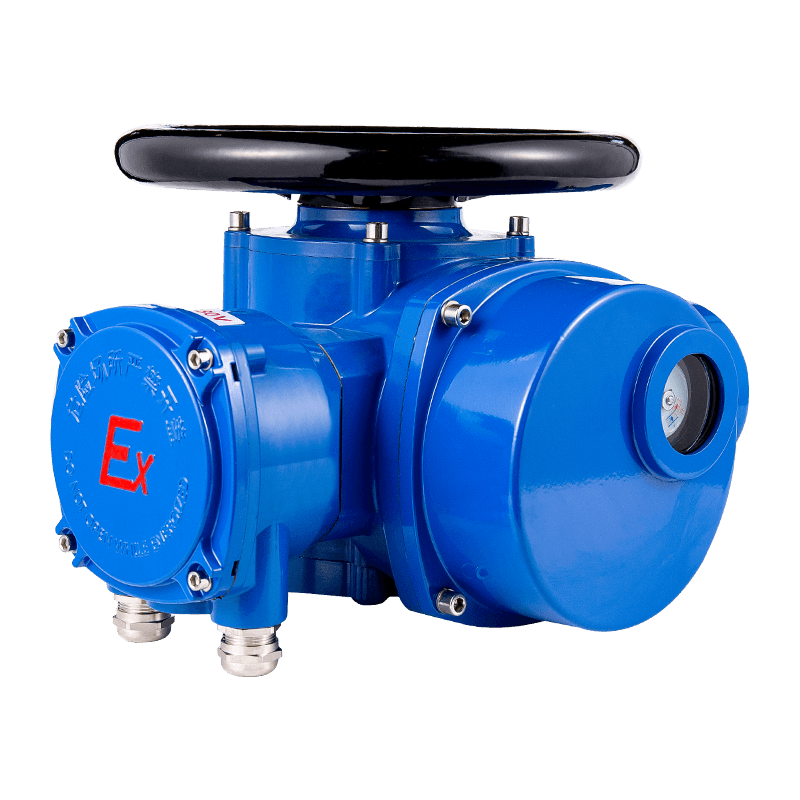
- Explosion-proof certification: Required for hazardous area classifications (ATEX, IECEx, or equivalent)
- Communication protocols: Modbus RTU, HART, or Profibus for integration with digital control systems
How to Select the Right Quarter Turn Electric Actuator
Follow this practical sequence to narrow your selection:
- Determine required torque: Obtain the valve's breakaway and running torque from the valve manufacturer's datasheet, then select an actuator with at least 1.3× safety margin.
- Confirm power supply: Match the actuator's voltage rating (24V DC, 110V AC, 220V AC, 380V AC three-phase) to the available site power.
- Choose control type: On/off for isolation duty; modulating (4–20 mA) for flow control applications.
- Assess environmental conditions: Select IP65 for outdoor use, IP67/IP68 for wet or submerged installations, and explosion-proof housing for hazardous zones.
- Verify mounting compatibility: Confirm the actuator's ISO 5211 flange size and stem drive matches the valve's top-works dimensions.
- Consider fail-safe needs: If process safety requires a defined valve position on power loss, specify a spring-return or battery-backup fail-safe model.
Frequently Asked Questions
What valves are compatible with quarter turn electric actuators?
They are designed for any valve requiring 90-degree rotation to open or close, including ball valves, butterfly valves, plug valves, and dampers. The actuator mounts using the standardized ISO 5211 flange pattern.
What is the difference between on/off and modulating quarter turn actuators?
On/off actuators operate only in fully open or fully closed positions. Modulating actuators can position the valve at any angle between 0° and 90° in response to a proportional control signal such as 4–20 mA.
How long does a quarter turn electric actuator last?
With proper sizing and installation, quality actuators typically achieve over 10,000 operating cycles before requiring maintenance. Lifespan depends heavily on correct torque sizing, duty cycle, and environmental protection.
Can a quarter turn electric actuator work without a power supply?
Standard models include a manual override handwheel for operation during power loss. Fail-safe models automatically drive the valve to a preset position using a spring or battery when power is interrupted.
What IP rating is needed for outdoor installations?
A minimum of IP65 is recommended for standard outdoor use. For applications exposed to wash-down, flooding, or submersion, IP67 or IP68 rated enclosures should be specified.
Is a quarter turn electric actuator suitable for hazardous areas?
Yes, provided it carries the appropriate explosion-proof certification such as ATEX or IECEx for the specific zone classification of the installation site.
Previous Post
What is a linear actuator – Learn how electric motors work
Next Post
How Do Electric Actuators Work?
Related Products
-
-
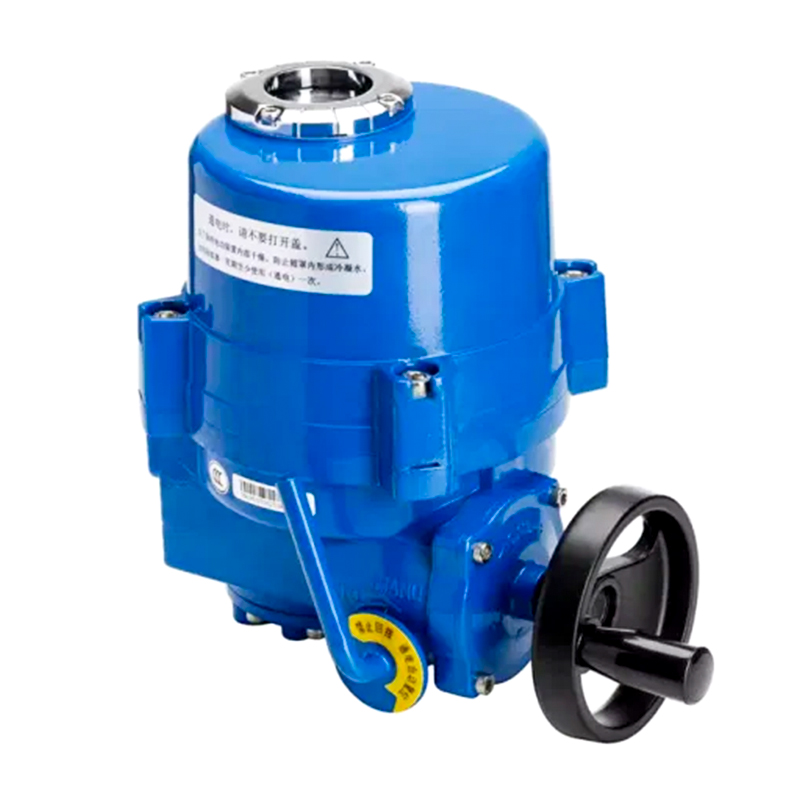
Cat:Quarter Turn Electric Actuator
The QM series partial rotary valve electric device includes ordinary switch type, integral type, regulating type, intell...
See Details -
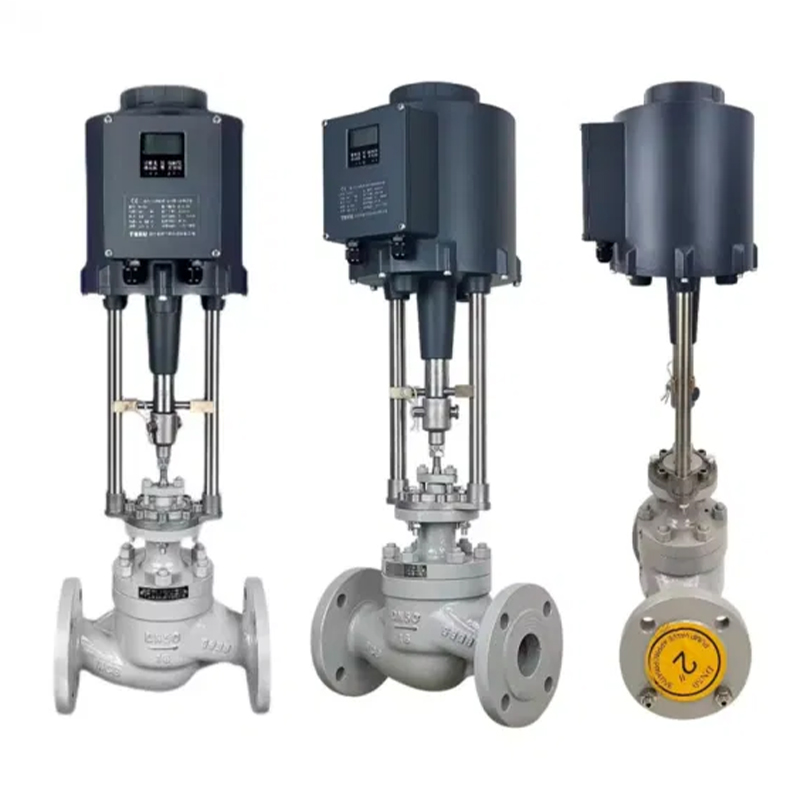
Cat:Liner Electric Actuator
Mainly used in the industrial field, equipped with the new Keyou A8 intelligent valve actuator control system, it has po...
See Details
CONTACT US
Shape the Future of Product with Us!

QUICK LINKS
CONTACT INFORMATION
- ADDRESS: Laoli Industrial Park, Chaoyang Village, Hengshan Bridge Town, Wujin District, Changzhou City, Jiangsu Province, China
- TELEPHONE: 0086 15335008985
- EMAIL: [email protected]
MOBILE

Copyright 2024 Changzhou Xinneng Automatic Control Equipment Co., Ltd All Rights Reserved.
