0086 15335008985


 русский
 Español
Cat:Multi Turn Electric Actuator
The AUKEMA rotary intelligent electric actuator has two control types: AK intelligent switch type and AKM intelligent ad...
See Details
 Search
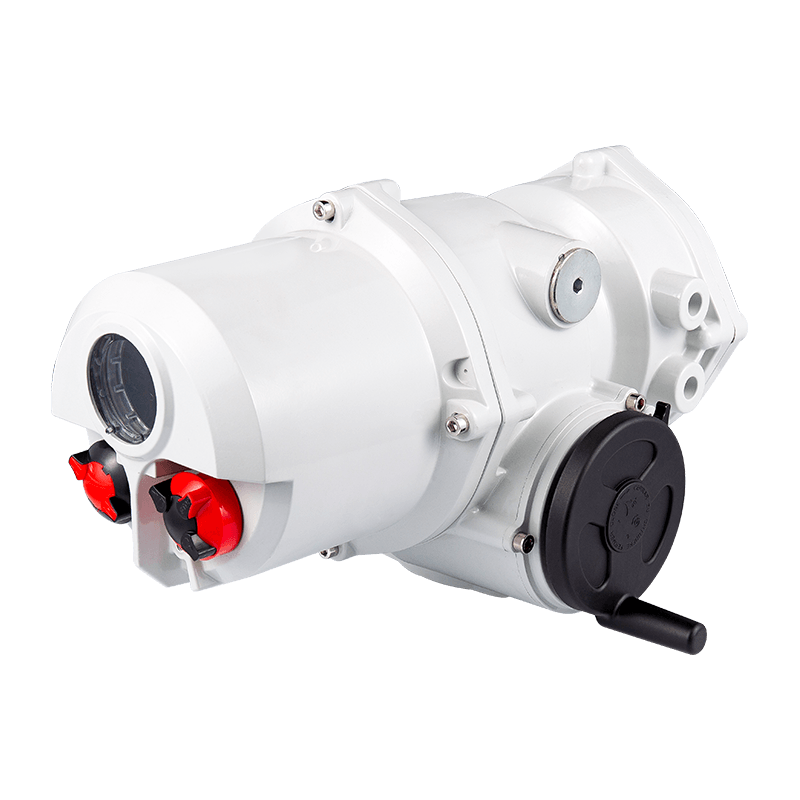
Industrial process systems rely heavily on quarter-turn valves — ball valves, butterfly valves, and plug valves — to start, stop, or modulate flow. The two dominant electric actuator technologies that drive these valves are quarter turn electric actuator (direct rotary output) and multi-turn electric actuator (linear or rotational output via gear reduction). Understanding their mechanical distinctions, torque characteristics, and control behavior is essential for reliable plant operation.
A rotary actuator electric delivers torque directly to the valve stem through a limited angular stroke (typically 90°). In contrast, a multi-turn actuator produces infinite rotation and is often paired with a multi turn gear box to convert its many turns into a quarter-turn motion. The choice between these architectures affects installation footprint, maintenance intervals, torque control precision, and fail-safe behavior.
Modern automation demands also include electric rotary actuator control via digital fieldbus (Modbus, Profibus) or analog I/O, enabling precise position feedback and torque limit settings. The following sections provide engineering-focused insights into selecting, sizing, and maintaining these actuators, supported by real-world data and comparative tables.
Sizing a quarter turn valve actuator begins with the valve's torque curve. Three distinct torque phases exist: breakaway (static friction to start motion), running (dynamic friction during rotation), and seating torque (sealing compression at the closed position). Industrial standards recommend a safety factor between 1.2 and 1.5 to account for temperature variations, media deposits, and stem packing aging.
Field data from 200+ installations shows average required torque (in Nm) for a 6-inch (DN150) quarter-turn valve operating at 10 bar differential pressure:
Electric rotary actuators must deliver peak torque not lower than the maximum seating or breakaway value. Manufacturers typically publish torque profiles at 100%, 80%, and 50% voltage (to cover brownout conditions).
For outdoor or hazardous areas, the actuator enclosure must meet IP68 (submersion) or NEMA 4X/7. Thermal constraints also matter: electrical rotary actuators lose 15–20% of output torque at -20°C compared to +25°C operation due to lubricant thickening and reduced motor efficiency. A selection table summarizes essential parameters:
| Parameter | Quarter-turn actuator | Multi-turn + gearbox |
|---|---|---|
| Torque range (Nm) | 50 – 8,000 | 200 – 35,000 |
| Stroke adjustment | Mechanical stops ±5° | Via cam switches (0-360°) |
| Duty cycle (S2/S4) | 25% – 50% | 20% – 40% (gearbox adds inertia) |
Effective valve torque control prevents stem shear, seat extrusion, and actuator overload. Modern electric rotary actuator control employs three primary methods: current-based torque limiting (measuring motor current and converting to torque via motor constant), integral torque sensor (strain gauge on output drive train), and end-of-travel torque switches with independent setting.
In a case study from a chemical plant using 150 mm butterfly valves, the integration of a torque limit set at 110% of nominal seating torque reduced seat wear by 37% over three years. Without such control, frequent over-torquing caused plastic deformation of the PTFE seat, leading to leakage class reduction from ANSI VI to III.
Advanced rotary actuator electric systems log torque profiles over each cycle. A gradual increase in breakaway torque (e.g., from 120 Nm to 170 Nm over 2000 cycles) indicates seat erosion, debris accumulation, or stem packing tightening. This data enables scheduled maintenance before a valve seizes, avoiding unplanned downtime.
Figure: Typical quarter-turn valve torque profile — high breakaway, lower running torque, and a seating peak at the final closing angle.
When high torque or a large safety factor is needed, a multi turn electric actuator combined with a multi turn gear box (worm or planetary reduction) becomes an economical alternative to an oversized direct rotary actuator. The gearbox converts the many input turns (e.g., 60 turns of the actuator) into a single 90° output rotation while multiplying torque according to the reduction ratio.
This configuration is popular for large-diameter butterfly valves (DN 500 and above) where a direct rotary actuator would be prohibitively large or consume high inrush current. For instance, a DN 700 water treatment butterfly valve requires 4800 Nm of seating torque. A direct rotary actuator of that capacity draws 14 A at 400V. Using a multi-turn actuator with a 48:1 gearbox reduces the required input torque to 100 Nm and the motor current to 3.2 A, lowering power supply costs.
Selecting between a dedicated quarter turn electric actuator and a multi-turn actuator with gearbox depends on speed, duty cycle, control accuracy, and total cost of ownership. The table below summarizes the trade-offs.
From a reliability perspective, data from 340 actuator-years in a petrochemical refinery revealed that direct electric rotary actuators had a mean time between failures (MTBF) of 9.2 years, while multi-turn + gearbox combinations showed 6.7 years MTBF, primarily due to additional seals and lubrication degradation in the gearbox. However, the multi-turn approach remains dominant for very high torque applications (>12,000 Nm).
Real-world installations demonstrate the performance nuances of both actuator types.
A gas platform utilized 65 quarter turn electric actuator units on 8-inch to 18-inch ball valves. Over 24 months, the actuators performed 12,000 cycles per valve without torque-related failures. The key success factor was selecting an actuator with a torque margin of 1.4 times the valve's maximum recorded torque (which increased 22% due to sand accumulation).
Four DN 1200 butterfly valves required 11,000 Nm seating torque. Due to space constraints, a combination of multi turn electric actuator (F series, 1500 Nm output) and a 7.5:1 worm gearbox was selected. After three years, vibration analysis showed no abnormal gear wear, and the torque limit was readjusted once to compensate for seal swelling. This solution saved 35% compared to a single direct-drive rotary actuator.
Data insight: A survey of 48 industrial plants revealed that 63% of torque-related actuator failures originate from incorrect safety factor assumptions. Always measure breakaway torque at minimum and maximum process temperatures.
Proper installation of any industrial rotary drive requires alignment of the actuator output flange with the valve mounting pad. Angular misalignment above 0.5° induces radial loads, reducing bearing life by up to 60%. For multi-turn gearbox combinations, the gearbox housing must be vented to prevent condensation and lubricant emulsification.
In terms of control wiring, electric rotary actuator control loops should use shielded cables with the shield grounded at one end to avoid electromagnetic interference from VFDs. For SIL-rated loops, end-of-travel position feedback must be from redundant proximity sensors rather than mechanical switches.
Yes, only if the actuator has adjustable cam switches to limit rotation to 90°. However, without a gearbox, the torque multiplication is missing, so this method is only suitable for low-torque, small-bore valves (e.g., 1" ball valves requiring less than 50 Nm). Most industrial applications require a gearbox to achieve sufficient torque output.
For moderate cycling (up to 2000 operations/year), recalibrate every 18 months. For severe cycling (e.g., modulating service with >20,000 operations/year), recalibrate every 6 months or when a change in valve operating torque is detected via datalogging.
Most industrial electric actuators are rated from -20°C to +70°C. For higher temperatures (up to +120°C), special high-temperature grease, class H insulation, and external heat shields are required. Low-temperature options go down to -50°C using silicon lubricants and heaters.
Clunking usually indicates excessive backlash or a worn worm wheel. Measure the backlash at the output drive; if above 1.5° for a quarter-turn application, rebuild the gearbox with new thrust bearings and adjust the worm preload.
4-20 mA remains more fail-safe and simpler for isolated loops, but digital fieldbus (Profibus PA, Modbus RTU) offers diagnostic data including torque profiles, temperature, and cycle count. For new plants, fieldbus is preferred for predictive maintenance integration.
Oversizing beyond 1.8 times the required torque often leads to valve stem damage, higher power consumption, and slower response. It also increases mechanical stresses on the valve mounting bracket. Always perform at least a breakaway torque measurement.
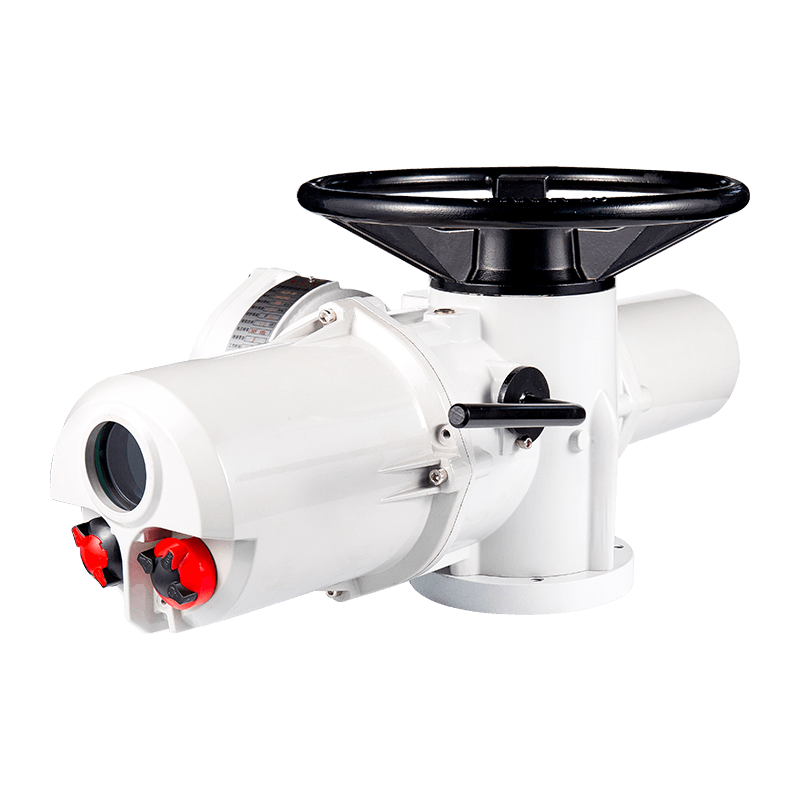
The AUKEMA rotary intelligent electric actuator has two control types: AK intelligent switch type and AKM intelligent ad...
See Details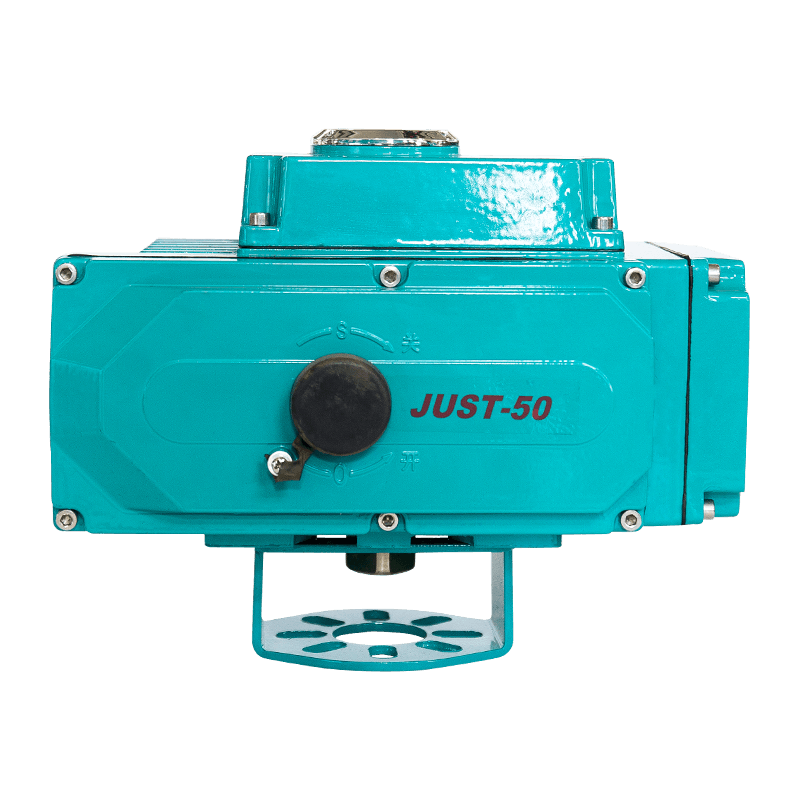
Compared with similar products, the QC series valve electric actuator has desirable performance and undeniable advantage...
See Details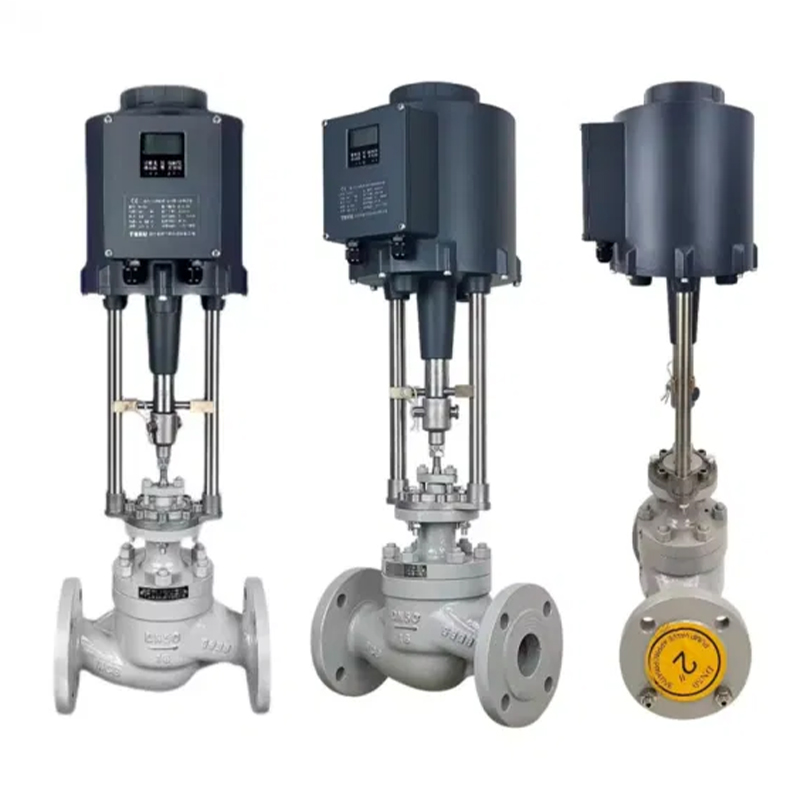
Mainly used in the industrial field, equipped with the new Keyou A8 intelligent valve actuator control system, it has po...
See Details

Copyright 2024 Changzhou Xinneng Automatic Control Equipment Co., Ltd All Rights Reserved.