
0086 15335008985


 русский
 Español

 Search
Home / News / Industry News / Electric Actuator Control: How Control Signals, Feedback, and Selection Work
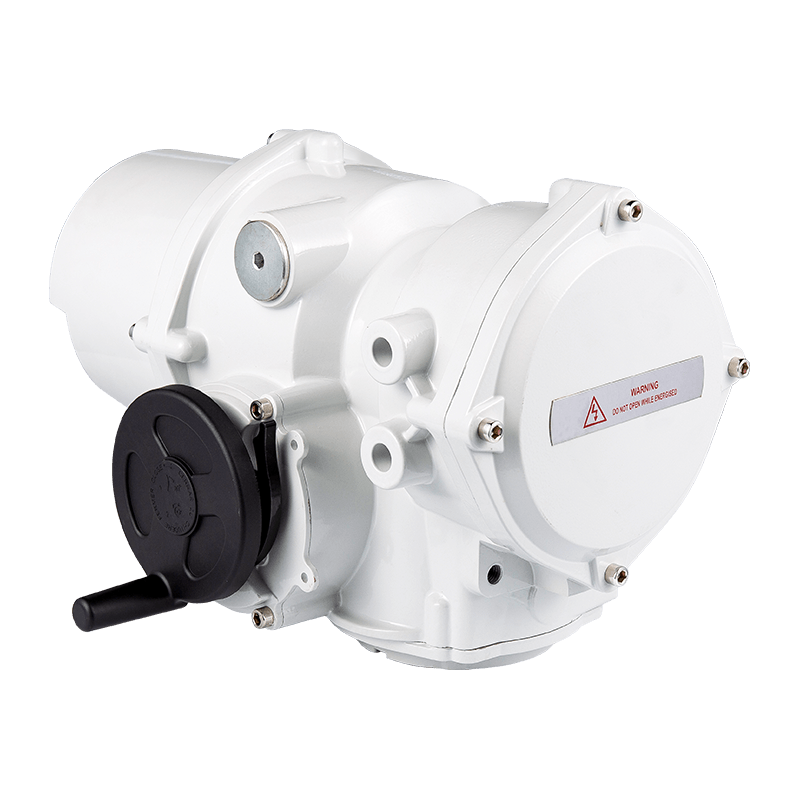
Electric Actuator Control: How Control Signals, Feedback, and Selection Work
Electric actuator control is where most valve automation problems actually begin. A mismatched control signal, an uncalibrated position feedback, or an overlooked failsafe requirement can turn a straightforward installation into a multi-day commissioning effort. In practice, the control package, not the mechanical strength of the actuator, determines whether a valve starts, stops, and holds its position as intended.
If you specify, install, or maintain automated valves, the control features are where you have the most freedom and the most risk. This article walks through the fundamentals of electric actuator control, from signal types and feedback options to failsafe configuration and commissioning checks.
What Electric Actuator Control Is
An electric actuator control system is the combination of electrical signals, internal electronics, and software logic that converts a command from your control system into a specific valve position. It includes the input interface that accepts the setpoint, the motor controller, and the feedback interface that reports the actual valve position.
There are two fundamental control modes, and most control questions come from confusing them.
On/Off Control
The actuator receives a binary open or close command and drives the valve fully in one direction until it reaches a limit, then de-energizes the motor. This mode is used for isolation valves, fire protection systems, and mine water-line valves.
Modulating Control
The actuator receives an analog setpoint, typically 4-20 mA or 0-10 V, and moves the valve to any position between 0 and 100 percent. It compares the setpoint to the actual position and drives the motor until they match.
The control mode drives the electrical wiring, feedback resolution, duty cycle rating, and commissioning procedure you will need. Choosing an on/off actuator for a modulating service, or vice versa, is one of the most expensive mistakes in valve automation.
Control Signals and Wiring Requirements
Signal compatibility between the actuator and your DCS or PLC is the most common field wiring issue. Before placing an order, confirm which input types both the controller and the actuator support.
- Analog current (4-20 mA) is the standard long-distance signal. It is immune to voltage drop and is preferred for modulating control and feedback in large plants.
- Analog voltage (0-10 V, 0-5 V) is simpler but suffers from line resistance. It works well when the actuator is close to the control panel.
- Digital command (24 V DC, 110 V AC, 230 V AC) is used for on/off commands, delivered by a dry contact or live voltage signal.
- Fieldbus (Modbus RTU, HART, Profibus) carries commands, feedback, and diagnostics on one cable. Intelligent actuators can report position, torque, temperature, and alarm history.
- Relay outputs provide open, close, or fault contacts to a DCS, indicator, or interlock.
A common mistake is assuming that a two-position DCS output can control a 4-20 mA modulating actuator. They are different control philosophies. If you are retrofitting an existing valve, verify the existing signal type, voltage, and wiring polarity before you commit to a supplier.
Feedback and Position Monitoring
For the control system to do its job, it needs to know where the valve actually is. Feedback is not a convenience; it is the foundation of a reliable automation loop.
- Limit switches provide simple open/closed contacts. They are the most economical solution for on/off valves and are often used for safety interlocks and remote indication.
- Potentiometers offer a continuous resistive signal proportional to position. They are common in basic modulating actuators but can drift or wear in high-vibration environments.
- Encoders provide a digital position signal with high resolution. They are standard on intelligent electric actuators that need precise control and repeatability.
- Position transmitters convert the actual position into a 4-20 mA signal, giving the DCS a live measurement of valve opening.
Intelligent electric actuators integrate these features into one unit. You can configure zero and span, set intermediate travel limits, and read diagnostic alarms from the local display. For maintenance teams, this means a faster path from a control problem to a cause: the actuator can tell you whether it reached the requested position or stopped because of an overload condition.
Selecting the Right Control Package
Selection is where you can avoid most future problems. The actuator control package has to match the valve, the service medium, and the environment.
Match the Motion to the Valve
The actuator output motion must match the valve motion requirement.
- Multi-turn actuators drive gate and globe valves, where the stem must rotate several turns to travel from open to close.
- Quarter-turn actuators drive ball, butterfly, and plug valves, where a 90-degree rotation is the full travel.
- Linear actuators drive sliding-stem valves, louver dampers, or valve systems where the stem moves in a straight line.
For a multi-turn valve in water treatment or power plant service, the AK-AKM series intelligent multi-turn electric actuator gives you on/off or modulating control with position feedback and local display in a single unit.
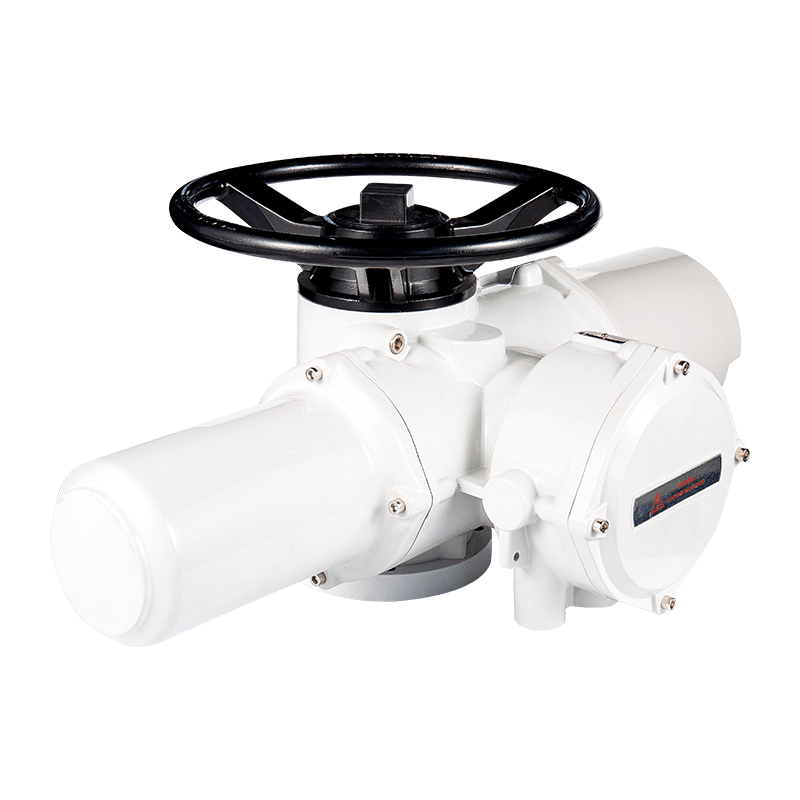 Multi-turn intelligent electric actuator for globe and gate valvesThis intelligent actuator provides on/off or modulating control with position feedback and local display, suitable for globe, gate, throttle, and water gate valves in water treatment or power plant service.View Product →
For a quarter-turn ball or butterfly valve, the AKQ-AKQM series quarter-turn intelligent electric actuator integrates the same control logic into a compact housing, with optional 4-20 mA input, encoder feedback, and torque-sensing protection.
Quarter-turn intelligent electric actuator for ball and butterfly valvesThis compact actuator integrates control logic with optional 4-20 mA input, encoder feedback, and torque-sensing protection, ideal for 90-degree rotating valves such as butterfly, ball, and plug valves.View Product →
In linear motion services, the ADL series digital intelligent linear actuator offers a built-in control unit for precise position and speed control, which is especially useful when the process requires fine regulation.
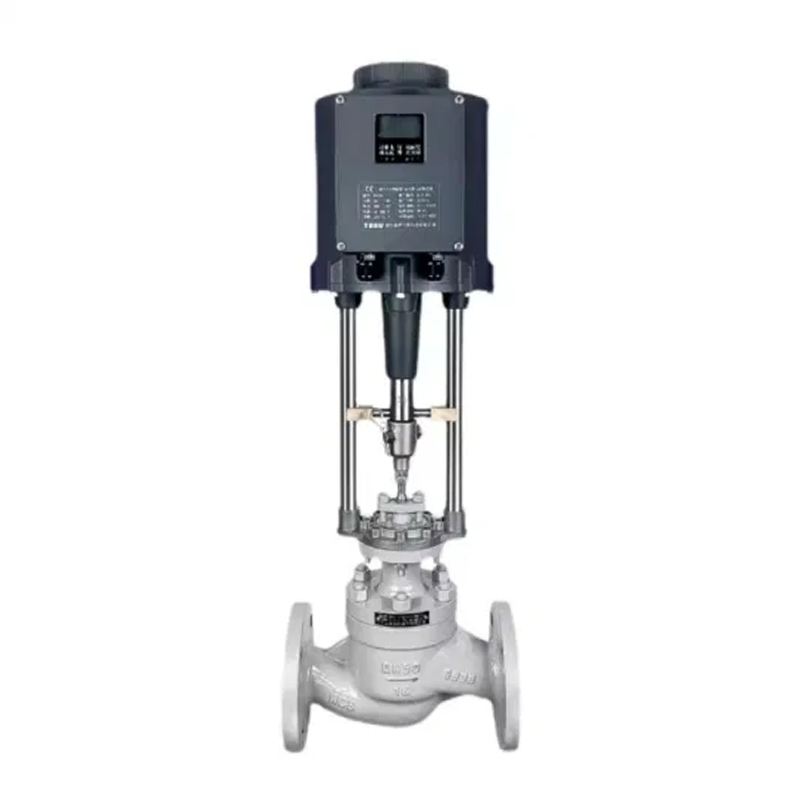 Digital intelligent linear actuator with built-in control unitThis linear actuator offers precise position and speed control with adjustable speed, multiple voltage options, and feedback signals, making it suitable for applications requiring fine regulation in industrial processes.View Product →
Check Torque, Duty Cycle, and Environment
Torque is the most important mechanical parameter. The actuator must handle breakaway torque to unseat a valve that has been closed for a long time, and seating torque to pull it fully shut without overloading. A safety margin of 20 to 30 percent over the calculated valve torque is common practice.
Duty cycle refers to how often the actuator can run without overheating. A modulating service can mean cycles every few seconds, while an on/off isolation valve may operate once a week. The duty cycle rating has to match the application.
The environment also matters. Ambient temperature, humidity, dust, and explosion zone classification determine the enclosure rating and whether a standard, explosion-proof, or mining-grade control package is needed.
Power, Failsafe, and Safety Provisions
The power source is part of the control package. Electric actuators are typically supplied with single-phase or three-phase AC motors, and the operating voltage and frequency must match the local supply. A phase reversal can make a three-phase actuator run in the wrong direction, so the control wiring should include phase-sequence protection or, at minimum, a check during commissioning.
Failsafe behavior is a safety decision that must be specified on the actuator and the controls.
- Fail-open moves the valve to the open position when control power or supply power is lost. This is common in fire protection or cooling circuits.
- Fail-closed closes the valve on loss of power. This is typical for isolation and safety-critical services where the closed position is the safe state.
- Stay-put holds the valve in its last position when power is removed. This is acceptable when the process can tolerate a hang-up or when an operator will intervene manually.
For quarter-turn valves that need failsafe action, a dedicated failsafe unit can provide spring-return or emergency power to move the valve to a safe position. You can read more about the practical considerations in this article on failsafe electric actuators for quarter-turn valves.
A manual override handwheel is strongly recommended for maintenance and emergency operation. It lets a technician operate the valve by hand even when the control system is down. A local/remote selector switch is also standard on intelligent actuators, letting the operator at the valve override the DCS command for maintenance work while the control system still reads the valve position.
Commissioning and Maintenance Best Practices
A control package can be perfect on paper and still fail in the field if it is not commissioned correctly. Use a structured sequence when bringing a new actuator online.
- Verify the supply voltage, frequency, and phase rotation before powering the unit.
- Check the control signal type and wiring polarity, especially for 4-20 mA loops.
- Set the travel limits so the valve stops at the actual mechanical open and close positions.
- Calibrate the position feedback zero and span so the DCS reads 0 percent at closed and 100 percent at open.
- Set the torque or overload protection to a value that protects the valve without tripping on normal seating forces.
- Run a full-stroke test and verify the DCS commands, limit switch indication, and analog feedback all agree.
- Record the configured parameters in the commissioning documentation for future reference.
After commissioning, routine maintenance is mostly inspection. Check terminal connections for loosening, verify the local display and alarm history, and periodically confirm that the feedback signal matches the actual valve position. If the actuator uses a battery backup for the controller, replace it on the manufacturer's recommended schedule.
Frequently Asked Questions
Q1: What is the difference between on/off and modulating electric actuator control?
On/off control sends a binary open or close command and drives the valve fully in one direction. Modulating control sends an analog setpoint and positions the valve anywhere between 0 and 100 percent, allowing flow, pressure, or level regulation.
Q2: Can an electric actuator accept a 4-20 mA signal?
Yes. Many electric actuators accept a 4-20 mA setpoint as standard. Check whether your unit also provides a 4-20 mA position output so the DCS can monitor the real valve position, not just the position it requested.
Q3: What happens to the valve when power is lost?
It depends on the failsafe configuration chosen at the time of purchase. The actuator can stay in its last position, or a spring mechanism can drive it to a fail-open or fail-closed state. Specify this clearly on the order sheet.
Q4: How do I decide between quarter-turn and multi-turn electric actuators?
The valve type decides it. Ball and butterfly valves need quarter-turn motion. Gate and globe valves need multi-turn motion. You can compare the practical trade-offs in this guide on quarter-turn versus multi-turn electric actuators.
Q5: What does intelligent mean in an intelligent electric actuator?
Intelligent refers to embedded control and feedback electronics: a position controller, a signal interface, limit and torque settings, and a local display for diagnostics and configuration. It makes setup easier and troubleshooting faster.
Previous Post
No previous article
Next Post
4 Wire Actuator Wiring Diagram: Terminals, Signals and Field Wiring Guide
Related Products
-
-
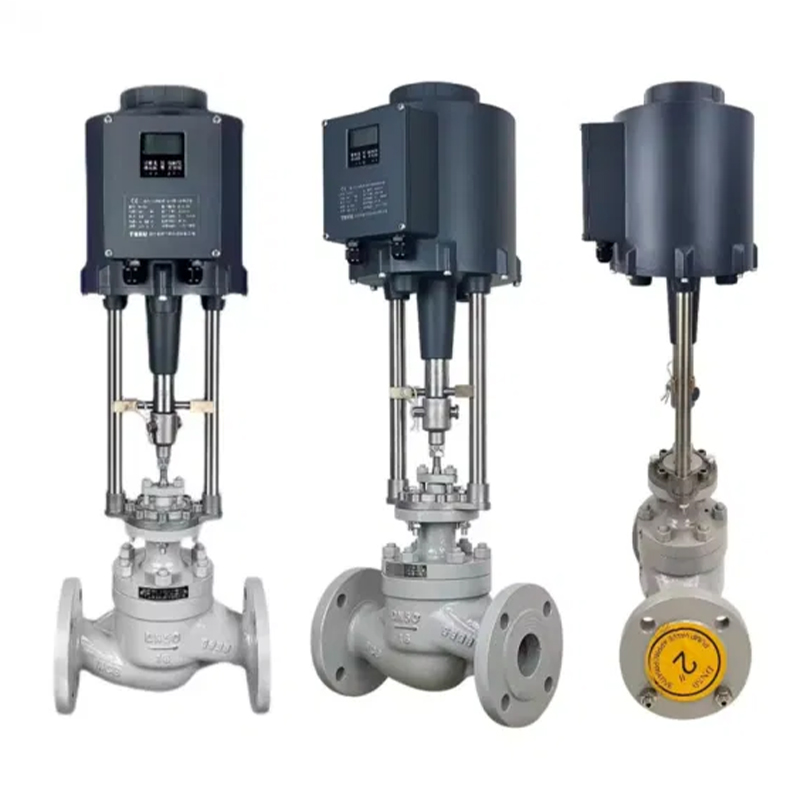
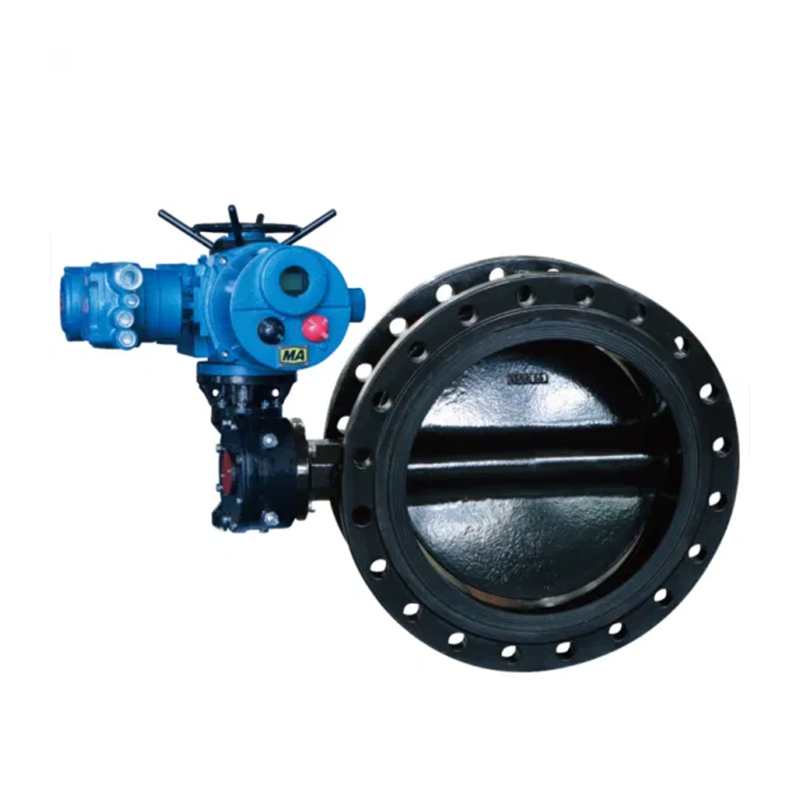
Cat:Liner Electric Actuator
Mainly used in the industrial field, equipped with the new Keyou A8 intelligent valve actuator control system, it has po...
See Details
CONTACT US
Shape the Future of Product with Us!

QUICK LINKS
CONTACT INFORMATION
- ADDRESS: Laoli Industrial Park, Chaoyang Village, Hengshan Bridge Town, Wujin District, Changzhou City, Jiangsu Province, China
- TELEPHONE: 0086 15335008985
- EMAIL: [email protected]
MOBILE

Copyright 2024 Changzhou Xinneng Automatic Control Equipment Co., Ltd All Rights Reserved.
