
0086 15335008985


 русский
 Español

 Search
Home / News / Industry News / Adjustable Valve Flow Control: How to Tune, Size, and Verify for Stable Flow
Adjustable Valve Flow Control: How to Tune, Size, and Verify for Stable Flow
A pump station running three parallel lines had one line that would not stay where it was set. Operators trimmed it to 45 m³/h in the morning; by the end of the shift it had wandered somewhere between 32 and 58 m³/h. The valve body was not at fault. The line had been built with an on/off butterfly valve and a spring-return actuator that only knew two positions, and then asked to hold a setpoint.
Adjustable valve flow control means the assembly can hold a chosen flow rate, not merely open or close. Three things have to work together: a throttling element whose flow changes smoothly with travel, an actuator that can stop and stay anywhere in its stroke, and a signal chain with enough resolution to make small corrections. Miss one of the three and the loop hunts, creeps, or never settles at all.
20–80%Travel band where most valves regulate well
±0.5–1%Typical dead band of a smart electric actuator
1.3–1.5×Torque margin over valve breakaway torque
10:1 to 50:1Rangeability of a well-sized globe valve
The sections below cover how adjustability is actually specified, the numbers that decide whether a setting survives a month in service, a field tuning sequence, and where a simple manual adjustment is still the right engineering answer.
What Adjustable Valve Flow Control Really Means
Adjustable describes a loop, not a single part. A gate valve with a handwheel is adjustable in a loose sense: you can stop it halfway. But the flow produced at half travel is unpredictable, the stem thread carries backlash, and the position drifts as line pressure changes. That is a throttling device, not a regulating one. The distinction shows up in how the actuator is designated, as switching type, integral type, or regulating (modulating) type, with only the last one accepting an analog command and reporting position back to the controller.
| Throttling element | Quality of adjustment | Typical rangeability | Where it fits |
|---|---|---|---|
| Globe valve, single seat | Smooth, close to linear with travel | 20:1 to 50:1 | Steam, water, small lines needing tight setpoints |
| Needle or small-bore globe | Very fine increments | 50:1 and above | Sampling, dosing, pilot lines |
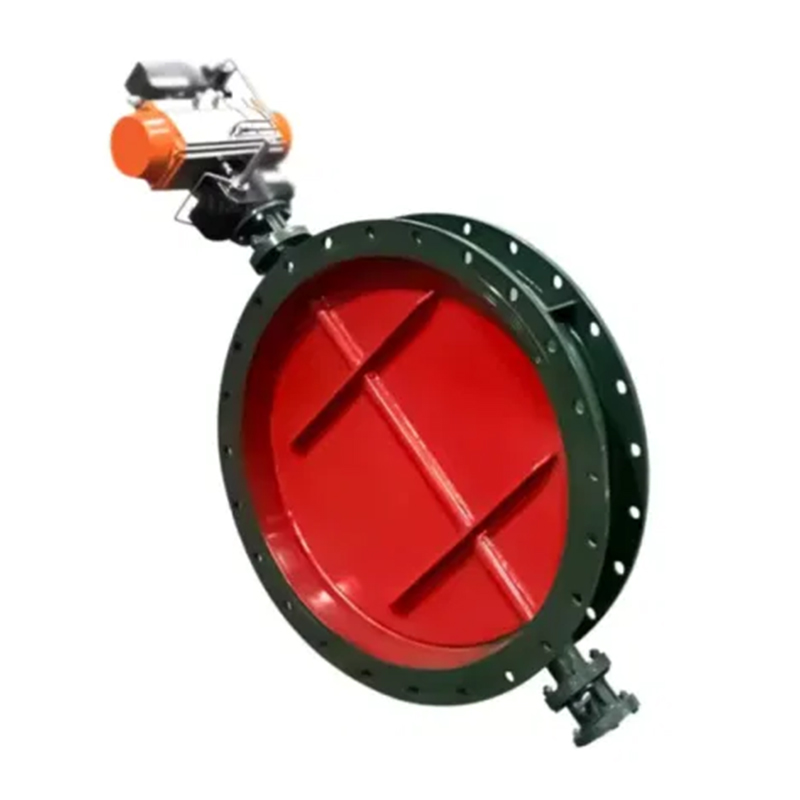
| Butterfly, soft seat | Moderate, non-linear near closed | 10:1 to 20:1 | Large water and air lines, 20–80% band |
| Butterfly, hard seal | Moderate, tolerant of heat and abrasion | 10:1 to 20:1 | Hot gas, slurry, desulfurization ducts |
| Segmented or V-port ball | Good, shears solids at the seat | 20:1 to 100:1 | Pulp, slurry, sticky media |
| Gate valve | Poor as a regulator | 3:1 or less | Isolation only |
| Sluice gate | Coarse, better for level than flow | Site dependent | Channels, tanks, intakes |
Two consequences follow. A valve selected purely for tight shutoff is not automatically a good regulator: a metal-seated ball valve can seal perfectly and still step unevenly at 30% open. And the actuator matters as much as the body. The same butterfly valve that holds a setpoint with a modulating actuator and a 4–20 mA signal will slam or drift when it is paired with an on/off unit.
The Numbers That Decide Whether Adjustment Holds
Cv and the operating band
Control valves are sized on Cv, the flow coefficient describing how much water passes at a given pressure drop. The sizing target is boring but effective: at normal duty the valve should sit between 20% and 80% of travel, with the design point around 60% to 70% open. A valve running at 8% travel has almost no room to correct downward and erodes its seat where velocity is highest. Upsizing for safety margin is the most common self-inflicted adjustability problem, and it follows the same pattern seen in field failures traced back to actuator and valve sizing assumptions that were never checked against real operating data.
Dead band, resolution and hysteresis
Even a perfectly sized valve will not hold a setpoint that falls inside the actuator's dead band. Smart electric actuators on a 4–20 mA signal typically hold position within roughly ±0.5% to ±1% of stroke, which is adequate for most process loops. Pneumatic actuators reach similar numbers only when a positioner is fitted; a plain solenoid pilot gives two positions and nothing in between. Mechanical hysteresis from stem friction, gear backlash and seal drag adds to the electronic figure, so the repeatability of a complete assembly is usually worse than the actuator datasheet alone suggests.
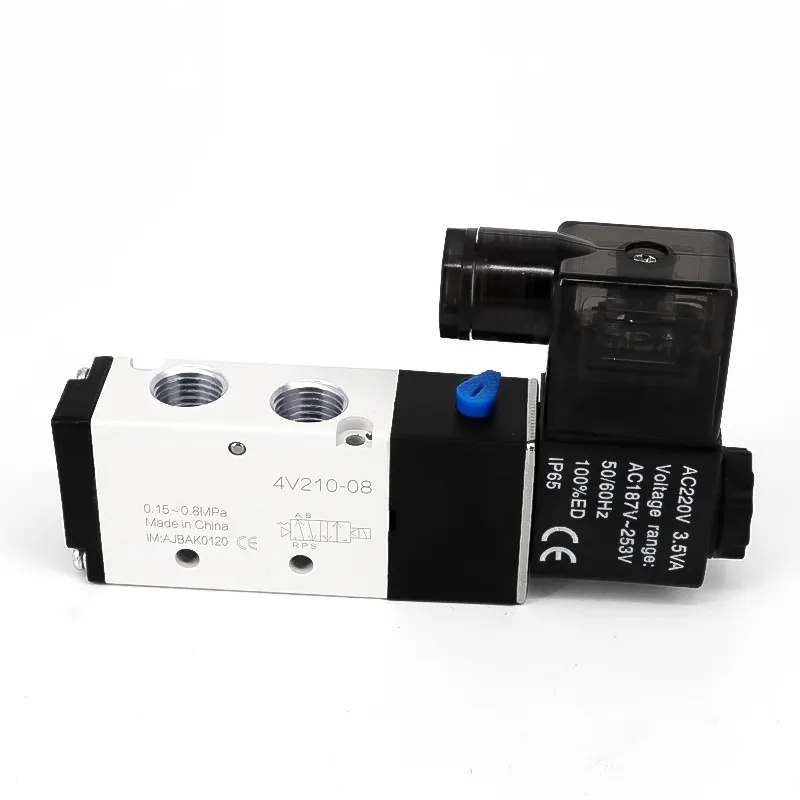
4V210-08 AC220V 5/2 Way Pneumatic Solenoid ValveSpring-return pilot-operated 5/2 directional valve for double-acting pneumatic actuators, with PT1/4 ports and replaceable AC220V coil.View Product →
That is why a positioner is rarely optional on a pneumatic throttling loop. It closes the gap between a commanded signal and an actual stem position, and it makes the difference between a valve that modulates and a valve that simply opens and closes.
Torque and thrust margin
Adjustability also assumes the actuator can move the valve whenever it is asked, including after a long static period. A torque margin of 1.3 to 1.5 times the valve's breakaway torque is the usual starting point, and higher for dry media, slurries, or large differential pressure across the seat. An actuator that stalls at 70% travel does not fail loudly. It simply stops answering the controller, and flow quietly settles wherever friction leaves it.
A loop cannot settle tighter than the actuator can move. When the correction the controller needs is smaller than the dead band, the valve keeps stepping past the setpoint, and the flow oscillates around a value it never actually holds.
Manual Adjustment, Electric Actuation or Pneumatic Actuation
Manual adjustment
A globe or needle valve with a handwheel, a graduated scale and a locknut remains a good answer when the process condition is stable, the setpoint rarely changes and nobody needs the value remotely. Set it, lock it, record the position, and it will hold for months. The limit is repeatability: after two or three manual moves, backlash in the stem thread means the same handle position no longer delivers the same flow.
Electric actuation
Electric actuators are the default choice for adjustable flow control on isolated valves. Multi-turn units drive gate and globe valves, quarter-turn units drive butterfly and ball valves, and modulating versions accept 4–20 mA or 0–10 V while feeding position feedback back to the control system. Intelligent models add configurable speed, adjustable dead band and resettable stroke limits. For linear-stroke globe valves that need fine, repeatable positioning, a straight-stroke adjustable intelligent actuator is the component that turns a throttling valve into a genuine control valve.
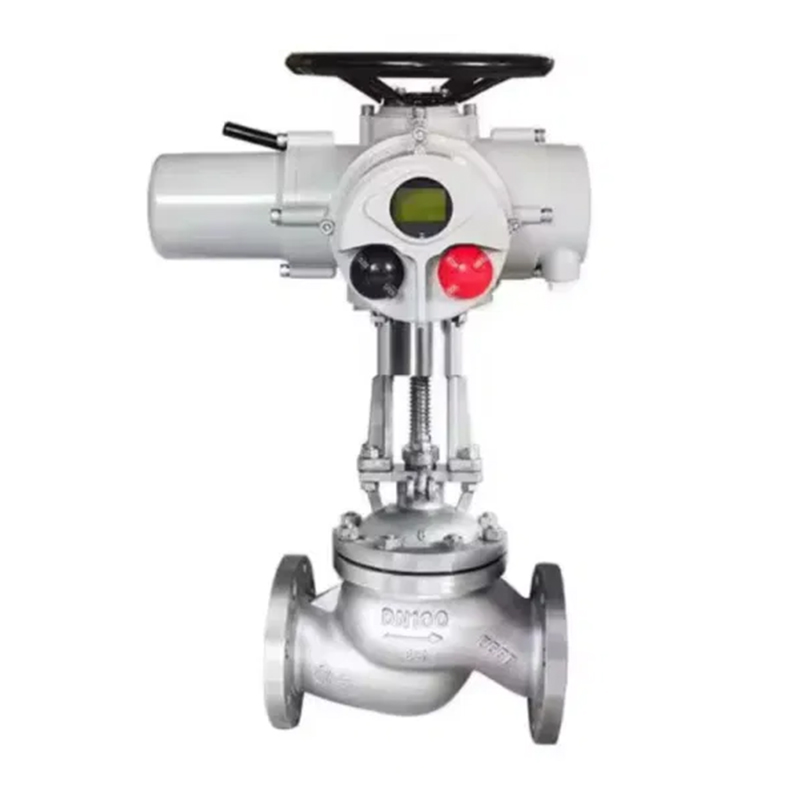 AKML Straight Stroke Adjustable Intelligent Electric ActuatorCombines an AKM multi-turn electric actuator with linear propulsion for precise positioning of linear-stroke valves using analog or switch control signals.View Product →
Pneumatic actuation
Pneumatic actuators suit fast cycling, hazardous areas and fail-safe requirements, since a spring can drive the valve to a known position when air pressure is lost. Rack-and-pinion models cover most quarter-turn duties, while scotch-yoke models deliver higher torque for large butterfly and ball valves. The catch is that proportional control does not come from the actuator itself; it comes from the positioner mounted on top of it. Without one, a pneumatic actuator is an on/off device with a spring.
A Field Procedure for Tuning Adjustable Flow Control
- Record a baseline. Command 0, 25, 50, 75 and 100% and log actual flow, upstream pressure and media temperature at each step. The shape of that curve says more than any datasheet: if flow barely changes between 50% and 75%, the valve is oversized for the duty.
- Check the mechanics first. Confirm the valve reaches both travel limits, measure backlash at the coupling, and verify the actuator mounting has not shifted. Tuning a loop around a loose coupling wastes a full day.
- Set the operating point. Bring the valve to the target flow and read the travel percentage. Below 15% or above 85%, change the trim or resize rather than compensating with controller settings.
- Set the dead band just above the hunting threshold. Tighten it until the actuator starts to cycle, then back off one step. Too tight and the motor runs continuously; too wide and flow drifts with every process upset.
- Tune the loop after the valve, not before. If flow oscillates, slow the controller, add damping, or reduce actuator speed on large valves. Reducing stroke speed solves more oscillation problems than gain changes do.
- Lock and document. Torque the locknut on manual valves, save the actuator parameters, and record travel, Cv and flow at the setpoint so the next shift can reproduce the setting.
Common Adjustment Problems and What They Usually Mean
- Flow creeps upward over hours. Usually actuator drift, or stem seal friction fighting the position feedback loop. Compare commanded position against actual feedback over a full shift.
- Flow oscillates by 10% or more. Dead band set too tight for the process noise, or loop gain too high for the valve's stroke time.
- Nothing happens over the first third of the signal. A sign of an oversized valve, or a linear trim used where an equal-percentage characteristic is needed.
- The actuator stalls partway through the stroke. Torque margin is too small, which almost always means differential pressure is higher than the sizing assumption.
- The setting no longer repeats after manual moves. Worn stem threads or accumulated backlash in the gearbox between actuator and valve.
Matching Adjustability to the Duty
Water and wastewaterPower and desulfurizationNatural gasFire protectionMiningShipping
The same adjustable assembly is judged by different criteria from one industry to the next. Municipal and industrial water treatment work asks for stable level and flow without water hammer, which usually means slower stroke times and either a channel gate or a butterfly valve trimmed for the expected range. Fire protection is the opposite case: fast full-stroke movement matters more than fine modulation, and most setpoints are pressure based rather than flow based.
Flue-gas desulfurization is the hardest duty of the group, because limestone and gypsum slurries abrade the seat continuously while the valve throttles for hours at a time. A hard-sealed, clamp-type desulfurization butterfly valve built for that service will outlast a general-purpose water valve by a wide margin. Mining adds certification to the requirement list, along with slurry and knife-gate designs for water and coal transport lines, while natural gas and shipping place the emphasis on explosion-proof construction, tight shutoff and remote position feedback.
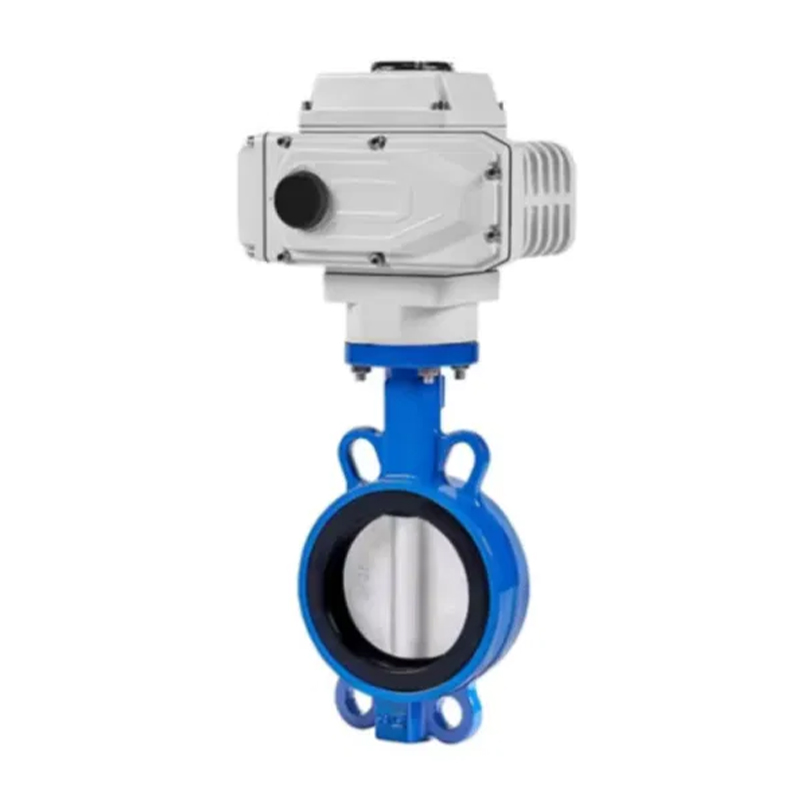 D971XT Electric Desulfurization Clamp Butterfly ValveWafer butterfly valve for flue gas desulfurization, with corrosion-resistant alloy plate/stem and wear-resistant rubber seat for limestone and gypsum slurries; electric actuator options.View Product →
Frequently Asked Questions
Q1: What is the difference between a flow control valve and a regular valve?
A regular on/off valve only needs to seal in two positions. A flow control valve has to hold intermediate positions repeatably, which requires a trim that changes flow smoothly with travel, plus an actuator that can stop anywhere in its stroke and stay there.
Q2: How much turndown can an adjustable valve deliver?
A well-sized globe valve commonly holds a usable range of 20:1 to 50:1, butterfly valves around 10:1 to 20:1. Practical turndown is often limited by the actuator dead band rather than by the valve body, especially on large lines.
Q3: Can I add a modulating actuator to a valve I already have?
Usually yes, provided the valve's stem and mounting flange suit the actuator output and the torque margin is at least 1.3 times breakaway torque. The harder question is whether the existing trim was sized to sit between 20% and 80% travel at your normal flow.
Q4: Electric or pneumatic for adjustable flow control?
Choose electric when the valve is isolated, the loop is slow, and position feedback is needed without an air supply. Choose pneumatic with a positioner when you need very fast cycling, a hazardous-area installation, or a spring-return fail-safe action.
Q5: How often should a flow setting be re-checked?
Verify commanded against actual position every three to six months, and immediately after any change in media, pressure drop or upstream process. Record the reading each time; drift is far easier to catch as a trend than as a single measurement.
Getting Adjustability Right the First Time
Adjustable valve flow control is decided at specification stage and confirmed in the field. Size the valve so it works between 20% and 80% of travel, choose a trim that suits the media, and pair it with an actuator whose dead band is smaller than the correction your loop needs. Then commission it with a baseline record, set the dead band just above the hunting threshold, and document the values so the next person can reproduce them.
If you are specifying a new line, or fixing a loop that refuses to settle, start from the duty rather than the catalog: line size, media, pressure drop, required flow range, and whether the valve must fail open, fail closed or stay put. Send those details to our engineering team and we will match a valve, actuator and positioner combination to the setpoint you actually need to hold.
Previous Post
No previous article
Next Post
AUKOMA's Guide to Best Low-Air-Consumption Actuators for Energy-Efficient Plants
Related Products
-
-
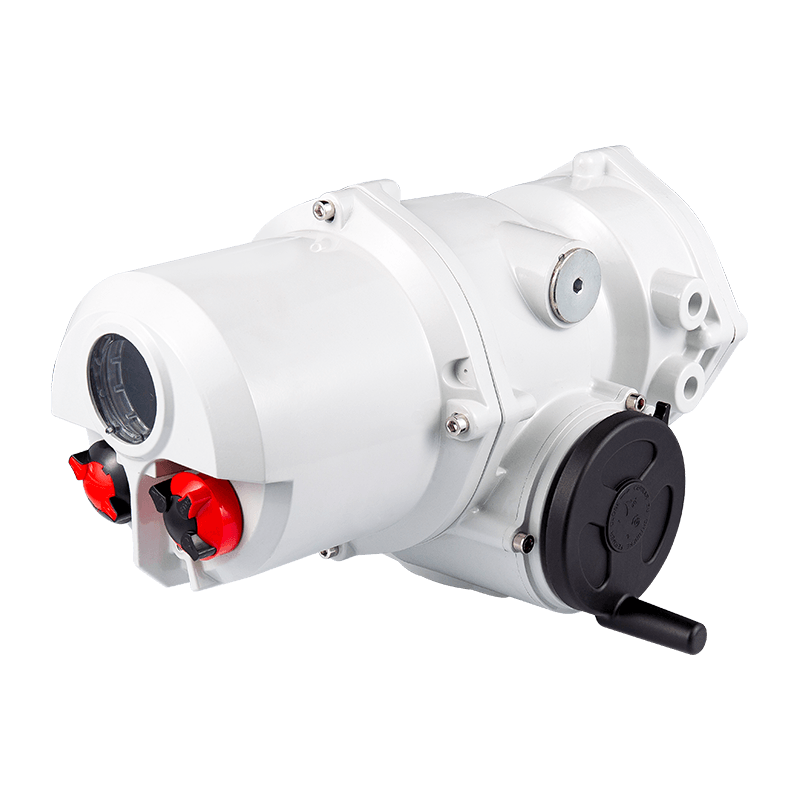
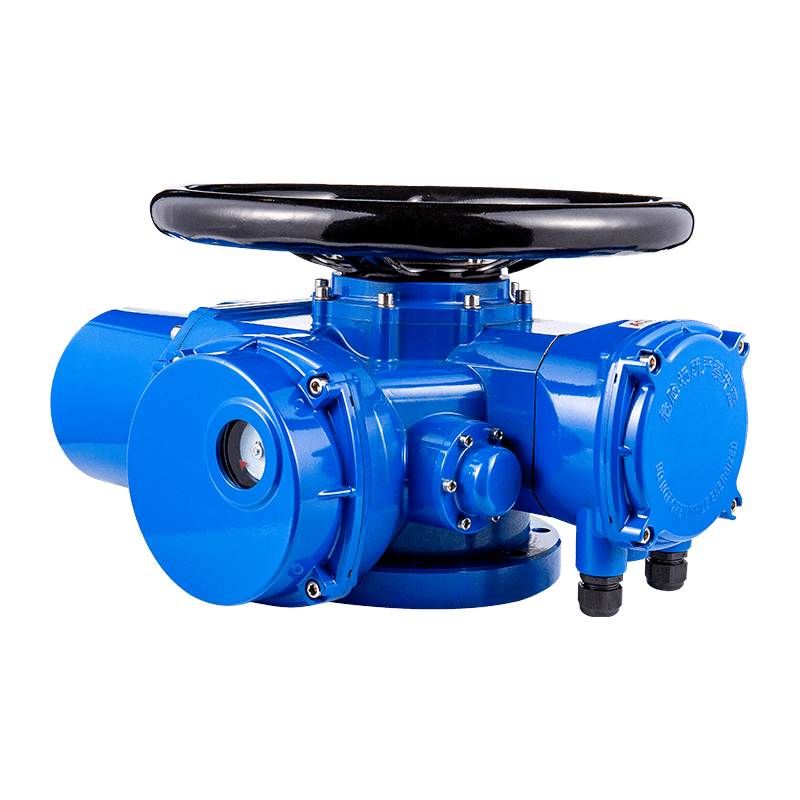
Cat:Quarter Turn Electric Actuator
The AUKEMA partially rotating intelligent electric actuator has two control types: AKQ intelligent switch type and AKQM ...
See Details
CONTACT US
Shape the Future of Product with Us!

QUICK LINKS
CONTACT INFORMATION
- ADDRESS: Laoli Industrial Park, Chaoyang Village, Hengshan Bridge Town, Wujin District, Changzhou City, Jiangsu Province, China
- TELEPHONE: 0086 15335008985
- EMAIL: [email protected]
MOBILE

Copyright 2024 Changzhou Xinneng Automatic Control Equipment Co., Ltd All Rights Reserved.
