0086 15335008985


 русский
 Español
Series Features
Key Features of the Quarter Turn Gear Box — KB & WL Series
KB Series — Material & Construction Options
- Primary housing materials: carbon steel and ductile iron
- Low-temperature steel and stainless steel available on request
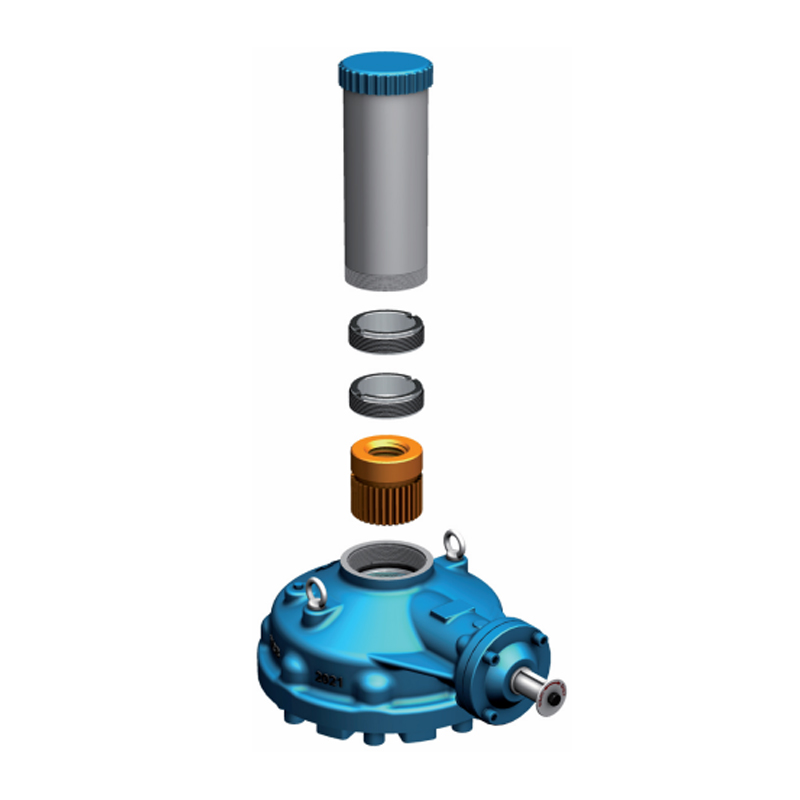
- Interchangeable stem bush inserts for direct valve stem compatibility
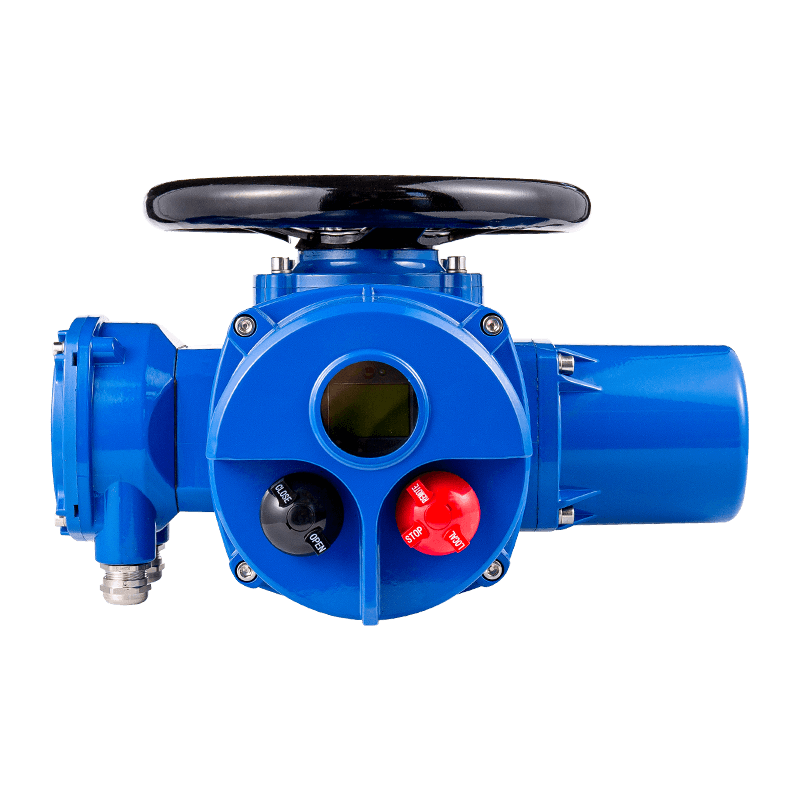
- Compatible with both manual hand-wheel and motorized electric or pneumatic actuators
KB Series — Environmental & Temperature Performance
- Standard ambient range: -20°C to +120°C
- Extended low-temperature options: -30°C, -40°C, and -59°C grades available
- Waterproof protection standard at IP65; IP67 and IP68 available on request
- Sealed housing construction resists dust, moisture, and temporary immersion in demanding field conditions
KB Series — Bearing & Transmission Design
- Uses tapered roller bearings for load distribution and reduced friction
- Worm-gear geometry provides inherent self-locking — valve position is maintained without external braking devices
- Bearing selection improves mechanical efficiency under both steady-state and dynamic torque loads
- Smooth breakaway torque characteristics reduce operating force requirements
WL Series — Split-Type Compact Construction
- Worm shaft and hand-wheel shaft are mechanically separated, providing a stiffer, more compact assembly
- Housing profile is optimized for space-constrained installations
- Wide flange configuration range ensures dimensional compatibility with a broad valve portfolio
- Material: ductile iron throughout for strength-to-weight balance
WL Series — Safety Lock & Sealing
- Integrated locking device prevents unintentional valve movement in service
- Inherent worm-gear self-locking supplements the mechanical lock for double-barrier position holding
- Standard waterproof rating: IP65; IP67 available by specification
- Bearing-supported transmission reduces hand-wheel operating effort and extends service life
KB vs. WL Series — Selection Comparison
| Criterion | KB Series | WL Series |
|---|---|---|
| Actuation mode | Manual and motorized | Manual only |
| Housing material | Carbon steel, ductile iron, SS (optional) | Ductile iron |
| Low-temp grade | To -59°C (optional) | Standard range |
| Shaft construction | Integrated worm design | Split worm/handwheel shafts |
| Stem bush | Available (valve-stem matched) | Standard flange interface |
| Bearing type | Tapered roller bearings | Rolling bearings |
| Waterproof (standard) | IP65 | IP65 |
| Waterproof (optional) | IP67, IP68 | IP67 |
| Locking mechanism | Self-locking (worm geometry) | Self-locking + integrated lock device |
| Primary application fit | Process automation, remote actuation | Manual valve stations, space-restricted layouts |
Frequently Asked Questions — Quarter Turn Gear Box
Q1: What does "self-locking" mean in a worm gear box, and why does it matter for valve service?
Self-locking in a worm gear occurs when the lead angle of the worm thread is sufficiently low that back-driving — reverse torque from the valve or pipeline pressure acting through the output shaft — cannot rotate the worm. This means the valve position is mechanically held without a separate brake or lock. In pipeline applications where line pressure or flow forces can exert torque on a ball or butterfly valve disc, self-locking prevents unintended valve movement during power loss or actuator failure. Both KB and WL series are designed with worm geometry that provides this property.
Q2: How do I determine whether the KB series or the WL series is appropriate for my application?
The primary decision factor is actuation mode. If the valve will be operated by an electric or pneumatic actuator now or in the future, the KB series is the appropriate choice because it supports motorized drive mounting. If the installation is manual-only and installation envelope or aesthetic compactness is a priority, the WL series split-shaft construction provides a lower-profile, cleaner assembly. Material requirements also differentiate the two: stainless steel housing is available only on the KB series, which is relevant in corrosive or hygienic service environments.
Q3: What is the purpose of the stem bush, and in which cases should it be specified?
The stem bush is an adapter insert machined to match the specific profile of a valve's stem — including stem diameter, key way configuration, or square/hex drive geometry. Without a stem bush, the gear box output bore must directly match the valve stem, which limits interchangeability across valve sizes and manufacturers. Specifying a stem bush is recommended when retrofitting a gear box onto an existing valve, when handling non-standard stem profiles, or when the project involves multiple valve sizes that need to use the same gear box model. It simplifies installation and reduces the risk of misalignment damage during assembly.
Q4: What ingress protection rating is needed for outdoor or submerged installations?
IP65 is adequate for most outdoor exposed installations — it confirms full dust-tight protection and resistance to water jets from any direction. IP67 is required when the gear box may be temporarily submerged (up to 1 m depth for 30 minutes), which is relevant for below-grade valve pits or installations subject to flooding. IP68 extends this to continuous submersion at greater depths and is specified for permanently submerged pipeline crossings or tidal zone installations. Both the KB and WL series can be ordered at IP67; only the KB series supports IP68 as a custom option.
Q5: How does low-temperature service affect gear box specification, and what are the material implications?
Standard carbon steel and ductile iron experience reduced impact toughness at sub-zero temperatures, which increases the risk of brittle fracture under shock loading or pressure surges. For service below -20°C, low-temperature steel alloys — typically impact-tested in accordance with EN or ASTM requirements at the rated minimum temperature — must be substituted for the housing and internal components. Lubricating grease selection also changes at low temperatures, as standard greases can thicken and increase breakaway torque beyond acceptable limits. The KB series supports low-temperature grades down to -59°C, covering cryogenic and LNG-adjacent applications where standard gear boxes would not be suitable.
Q6: What flange standards do these gear boxes conform to for mounting on valves?
Quarter-turn gear boxes in this product category are typically manufactured to comply with ISO 5211 mounting flange dimensions, which define the bolt-circle diameter, pilot diameter, and bolt pattern for valve-to-actuator interfaces. ISO 5211 covers a range of torque classes (F03 through F40 and beyond), and the WL series in particular emphasizes flange variety to maximize compatibility across valve sizes and pressure ratings. When specifying, the installer should confirm the valve's ISO 5211 interface designation and cross-reference it with the gear box mounting flange rating to ensure dimensional and torque capacity alignment.