
0086 15335008985


 русский
 Español
 Search
Home / News / Industry News / Why Electric Linear Actuators Are Transforming Aerospace Motion Control?
Why Electric Linear Actuators Are Transforming Aerospace Motion Control?
Introduction: The Rise of Electric Actuation in Aerospace
Modern aerospace engineering faces relentless demands for higher efficiency, lower weight, and unprecedented reliability. Within this landscape, linear actuator aerospace applications have expanded from niche functions to mission-critical roles. The shift toward more-electric and all-electric aircraft architectures has accelerated the adoption of electric actuators over traditional hydraulic and pneumatic systems. These compact, intelligent devices deliver precise linear motion while enabling distributed control, reduced maintenance, and improved overall system safety.
This article explores why electric linear actuators have become indispensable in aviation and space platforms. We will compare linear and rotary actuators, examine real-world application data, and outline how engineering teams overcome design challenges. Whether for flight control surfaces, landing gear, or thrust reversers, the evidence clearly shows that electric actuation represents the future of aerospace motion control.
Why Electric Linear Actuators Outperform Hydraulic Systems in Aircraft
The superiority of electric actuators stems from quantifiable benefits that directly impact aircraft design, operation, and lifecycle costs. Industry studies comparing electric versus hydraulic actuation on typical transport aircraft highlight the following advantages:
- 30–40% weight reduction – Elimination of hydraulic fluid, pumps, reservoirs, and extensive pipework.
- Maintenance interval extension – Electric actuators achieve mean time between failures (MTBF) exceeding 25,000 flight hours, compared to 8,000–12,000 hours for hydraulic equivalents.
- Instantaneous readiness – No warm-up or pressure accumulation required; full force available at power-on.
- Lower lifecycle energy consumption – On-demand power draw instead of continuous pump operation reduces total energy use by up to 55%.
Modern twin-aisle commercial aircraft employ over 80 electric linear actuators for functions ranging from high-lift systems to environmental control valves. These platforms have documented a 28% reduction in direct maintenance costs attributed purely to the transition from hydraulic to electric actuation. Furthermore, the absence of flammable fluids enhances post-crash safety and reduces fire risk in high-temperature zones such as engine nacelles.
Linear vs. Rotary Actuators in Aerospace: A Technical Comparison
While linear and rotary actuators both convert electrical energy into mechanical motion, their applications and design philosophies differ significantly. Understanding these differences allows engineers to select the optimal actuation strategy for each aircraft subsystem.
Application Domains: Where Linear Excels vs. Where Rotary Dominates
| Parameter | Linear Actuators | Rotary Actuators |
|---|---|---|
| Motion output | Straight-line push/pull | Rotational (angles, continuous spin) |
| Primary aerospace use | Flight control surfaces, landing gear retraction, thrust reversers | Valve control, radar antenna positioning, seat recline mechanisms |
| Force/torque density | Very high linear force (up to 80 kN) | Moderate torque, often with gearboxes |
| Position feedback integration | Direct (LVDT, Hall effect) | Indirect via angle sensors |
| Main failure mode | Lead screw jamming (with jam-tolerant designs) | Output shaft backlash |
Many modern aircraft combine both types. For instance, a high-lift flap system uses a rotary actuator to drive a torque tube, which then powers multiple linear actuators to extend the flap panels uniformly. This hybrid approach exploits the benefits of each technology without compromising on redundancy or packaging constraints.
Key Aerospace Applications of Electric Linear Actuators (with Performance Data)
The adoption of electric linear actuators has permeated virtually every major aircraft subsystem. Below are four representative applications backed by operational data from next-generation platforms.
1. Primary Flight Control Surfaces (Ailerons, Elevators, Rudder)
Electrohydrostatic and electromechanical actuators now handle primary control surface movements on several regional jets and business aircraft. A typical installation uses quadruple-redundant electric actuators with force-fighting mitigation. Recorded data shows response time of under 45 milliseconds from command initiation to full deflection, exceeding the requirements for Loss of Control prevention.
2. Landing Gear Retraction and Extension
Electric linear actuators have replaced hydraulic jacks in landing gear systems of unmanned aerial vehicles (UAVs) and some light attack aircraft. Test reports indicate a 20% reduction in gear deployment time while eliminating hydraulic leaks that previously accounted for 15% of landing system maintenance events. The load capability ranges from 5 kN for small UAVs to over 120 kN for main landing gear of transport aircraft.
3. Thrust Reverser Actuation
Engine nacelles increasingly rely on electric linear actuators to deploy blocker doors and cascade vanes. Fleet data from high-bypass turbofan operators reveal that electric thrust reverser actuation achieves 99.997% dispatch reliability, with mean time between unscheduled removals exceeding 50,000 flight cycles. Additionally, the elimination of bleed air lines reduces fuel burn by approximately 0.5% on short-haul missions.
4. Cabin Pressure and Environmental Control Valves
High-precision linear actuators modulate outflow valves to maintain cabin altitude within ±150 feet of target. Modern systems achieve position accuracy of 0.05 mm, translating to passenger comfort improvements and reduced structural fatigue. Power consumption per valve sits below 25 W, allowing battery-powered operation during emergency depressurization events.
How Electric Actuators Overcome the Limitations of Hydraulic and Pneumatic Systems
Traditional aerospace actuation relied on centralized hydraulic systems with thousands of feet of tubing, dynamic seals, and high-pressure pumps. Electric actuators eliminate these failure-prone components entirely. The following comparison table summarizes the decisive advantages:
| Attribute | Hydraulic Actuation | Pneumatic Actuation | Electric Actuation |
|---|---|---|---|
| System efficiency | ~45% | ~25% | >80% |
| Leak potential | High (fluid loss, fire risk) | Medium (low-pressure air) | None (purely electrical) |
| Redundancy complexity | Dual pumps + separate lines | Multiple reservoirs | Dual windings, independent power feeds |
| Cold temperature start | Requires fluid warm-up | Icing possible in valves | Instant full performance |
| Health monitoring | Pressure/flow sensors only | Difficult | Embedded current, temp, vibration sensing |
Furthermore, linear and rotary actuators powered electrically enable “power-by-wire” architectures, reducing airframe weight by up to 700 kg on a widebody aircraft. This translates directly into increased payload or extended range — typically 200–300 nautical miles for a mid-size airliner.
Design and Reliability Challenges for Aerospace Linear Actuators
Deploying linear actuator aerospace applications in harsh environments demands rigorous engineering. Temperature extremes from -55°C at high altitude to +150°C near engine pylons, combined with vibration profiles reaching 30g RMS, push actuators to their limits. Key mitigation strategies include:
- Dual-channel position sensors – Redundant LVDT or magnetoresistive sensors with cross-comparison to detect single failures.
- Jam-tolerant lead screws – Specialized roller screw technology that continues operation even after ball circulation failure.
- Conformal coatings and hermetic sealing – Protection against hydraulic fluid intrusion, salt fog, and moisture (IP67 or higher).
- Built-in test (BIT) – Continuous monitoring of winding insulation resistance, temperature gradients, and end-of-travel limits.
Quantified reliability targets for civil aviation require a probability of loss of actuation below 1 × 10⁻⁹ per flight hour. Modern electric linear actuators with dissimilar redundancy (e.g., combined electromagnetic and piezoelectric backup) have demonstrated in-service rates of 4.2 × 10⁻¹⁰, meeting the most stringent safety levels for fly-by-wire controls.
Future Trends: Smart Actuators and All-Electric Aircraft
The next decade will witness three major evolutions in electric actuators for aerospace:
- Predictive maintenance integration – Actuators will upload real-time wear data to ground systems, enabling condition-based replacement instead of fixed intervals. Trials predict a 40% reduction in no-fault-found removals.
- GaN-based power electronics – Gallium nitride drives will increase actuator power density by 35% while reducing heat sink requirements, critical for high-altitude operation.
- Hybrid linear-rotary modules – Novel motor topologies allow a single actuator to produce both linear and rotary outputs independently, simplifying landing gear and door mechanisms.
Additionally, the push toward all-electric aircraft (eliminating hydraulic and bleed air systems entirely) will require over 200 electric linear actuators per narrowbody aircraft. This presents a multibillion-dollar market opportunity, driving advances in high-voltage (up to 1,200 VDC) actuation and arc fault management. Certification standards such as DO-254/DO-178C have already been updated to embrace electric actuation as a primary flight control element.
Frequently Asked Questions (FAQ)
Q1: What are the main forces and speeds achievable by aerospace linear actuators?
Typical force outputs range from 500 N for small flight control trim tabs to over 180,000 N for main landing gear actuation. Linear speeds vary between 2 mm/s (precision flap positioning) and 150 mm/s (rapid thrust reverser deployment). Speed-force tradeoffs are managed through screw pitch selection and motor gearing.
Q2: How do electric linear actuators handle emergency operation after power loss?
Critical aerospace actuators incorporate "fail-safe" mechanisms: either spring-return (for thrust reversers) or an auxiliary backup battery that provides dedicated power for a minimum of three complete extension/retraction cycles. For primary flight controls, multiple independent electrical channels from separate generators ensure continued operation even after total engine failure.
Q3: Can linear actuators be used in space applications (satellites, launch vehicles)?
Absolutely. Radiation-hardened electric linear actuators operate solar array drives, antenna pointing mechanisms, and engine gimbals. They must survive launch vibrations (up to 20g) and vacuum conditions. Specialized lubricants and thermal coatings allow function from -100°C to +125°C. Several Mars landers have employed such actuators for instrument deployment with >99.9% mission success.
Q4: What certifications are required for commercial aircraft linear actuators?
Actuators must comply with EASA CS-25 or FAA Part 25 regulations. Key documents include RTCA DO-160 (environmental conditions), DO-254 (design assurance for electronics), and ARP4754 (system development). Each actuator requires a Component Maintenance Manual and a Failure Mode and Effects Analysis (FMEA) showing maximum hazard classification at the aircraft level.
Q5: How does the cost of electric actuation compare to hydraulic systems over a 20-year lifecycle?
Industry economic analyses reveal that while initial procurement of electric actuators is 10–15% higher, total lifecycle cost (including installation, fuel, maintenance, and downtime) is 32–38% lower. The breakeven point typically occurs after 4,500 flight hours or approximately 18 months of operation for short-haul aircraft.
Previous Post
SS304 vs SS316 Pneumatic Actuators: How to Select the Right Stainless Steel for Corrosive Industrial Environments
Next Post
Why Use Pneumatic Valve Actuators?
Related Products
-
-
Cat:Coal Mine Valves
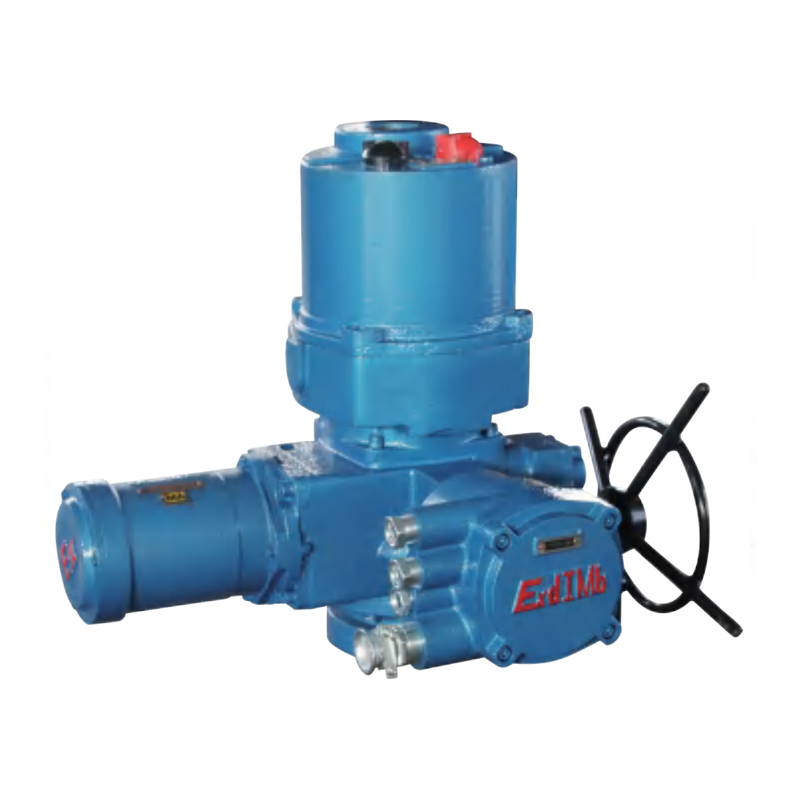
The MGQ Small Caliber High-Pressure Electric Valve is an integrated electromechanical valve engineered specifically for...
See Details -
Cat:Liner Electric Actuator
Mainly used in the industrial field, equipped with the new Keyou A8 intelligent valve actuator control system, it has po...
See Details
CONTACT US
Shape the Future of Product with Us!

QUICK LINKS
CONTACT INFORMATION
- ADDRESS: Laoli Industrial Park, Chaoyang Village, Hengshan Bridge Town, Wujin District, Changzhou City, Jiangsu Province, China
- TELEPHONE: 0086 15335008985
- EMAIL: [email protected]
MOBILE

Copyright 2024 Changzhou Xinneng Automatic Control Equipment Co., Ltd All Rights Reserved.
